


[Baby Care #10] How Newborn Screening Programs Differ By Country
Newborn screening (NBS) programs vary dramatically around the world. While the fundamental goal is the same—to identify infants with certain serious but treatable conditions before symptoms appear—the implementation differs based on national policies, healthcare infrastructure, and economic considerations.
The most significant difference lies in the number and type of conditions included in the screening panel. Some countries screen for only a few core disorders, while others have comprehensive panels that test for dozens. According to a review in The Lancet, the number of disorders on NBS panels can range from just one to over 40.
FAQs
Why isn’t newborn screening the same everywhere?
National health priorities, economic factors, and different criteria for evidence and cost-effectiveness lead to varied NBS programs. Each country’s decision-making bodies weigh these factors differently, resulting in a patchwork of global policies.
What is the most common condition screened for?
Phenylketonuria (PKU) is the original condition for which newborn screening was developed. It remains a cornerstone of nearly all established screening programs worldwide due to its clear benefit from early dietary intervention.
How are new diseases added to screening panels?
Adding a condition typically requires rigorous evaluation. This includes assessing the disorder’s prevalence, the accuracy of the screening test, the availability of an effective treatment, and the overall cost-benefit for the public health system.
Is newborn screening mandatory?
In most countries with established programs, newborn screening is legally mandated, but parents may have the option to opt out for personal or religious reasons. The specific regulations vary by jurisdiction.
The Foundation of Newborn Screening
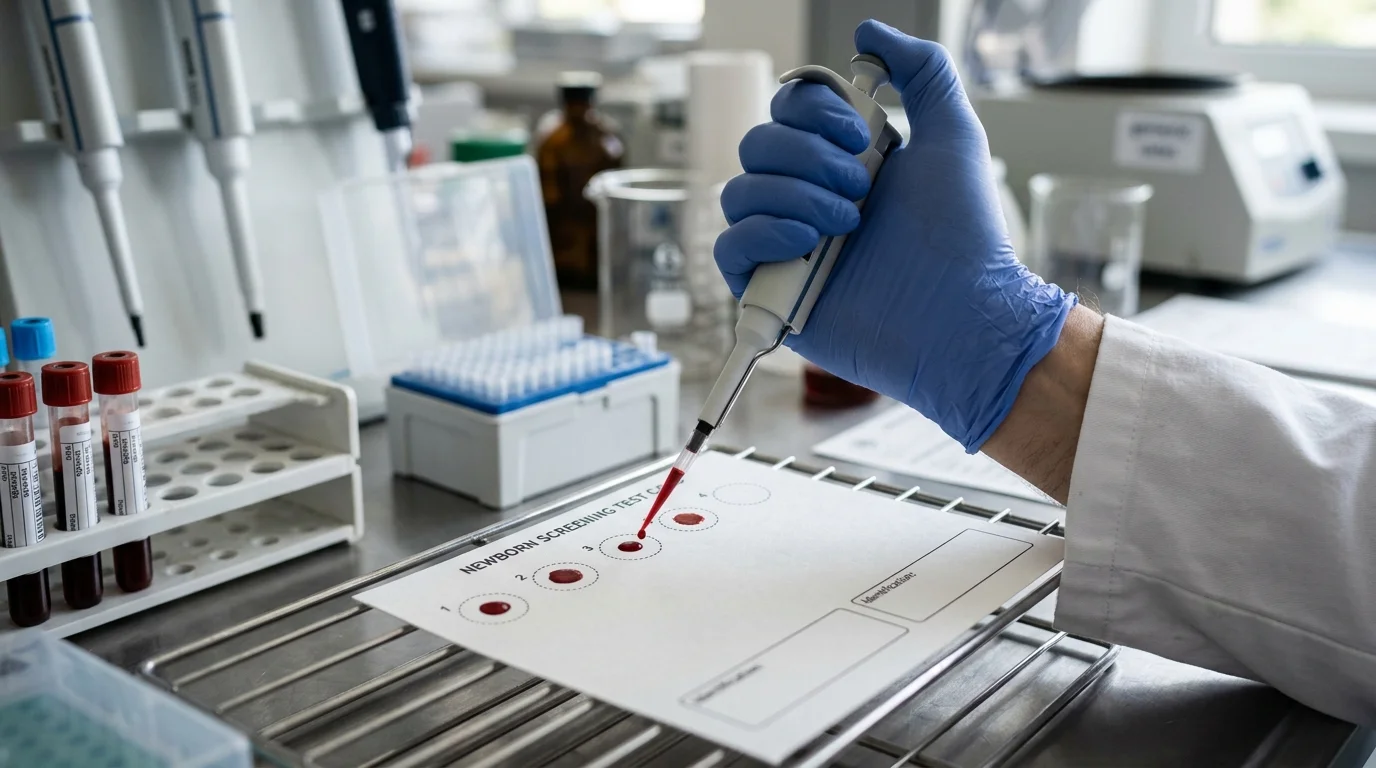
The concept of newborn screening began in the 1960s with Dr. Robert Guthrie’s development of a test for phenylketonuria (PKU), an inherited metabolic disorder. If not detected and managed with a special diet early in life, PKU leads to severe intellectual disability. The success of the PKU test, which uses a simple heel prick to collect a few drops of blood on a filter card, established a new paradigm in preventive medicine.
Today, this practice is widespread, with NBS programs active in all U.S. states and nearly all European countries. The core principle remains unchanged: identify infants at risk for specific conditions where early intervention can significantly alter the clinical outcome.
Why Screening Panels Diverge: A Country-by-Country Look
While the concept is universal, the application is highly localized. The list of screened conditions, known as the screening panel, is the primary point of divergence.
1. Policy, Economics, and Evidence
The decision to add a condition to a national panel is complex. It involves a delicate balance of clinical evidence, public health priorities, and economic resources. As detailed in the International Journal of Neonatal Screening, European countries have taken different approaches based on the level of evidence required, the demand for demonstrated cost-effectiveness, and the structure of their national decision-making bodies.
For example, some nations may prioritize conditions with well-established treatments and highly accurate tests, while others may be more willing to include conditions based on emerging evidence from pilot studies.
2. A Case Study: Slovenia’s Centralized Approach
Slovenia offers a clear example of a structured, nationwide program. Newborn screening is mandated by law, and a single central laboratory analyzes samples from over 99% of newborns. This centralized system facilitates quality control and efficient expansion. In 2022, the country planned a second major expansion of its NBS program to detect more than 40 different congenital diseases, showcasing a commitment to broadening its preventive health measures.

The Future of Newborn Screening: Expansion and Genomics
The push to expand NBS panels is a significant trend in global public health. The rationale is compelling; it is estimated that over 6,000 known rare diseases collectively affect more than 30 million people in Europe alone. Many of these conditions have their onset in infancy and could benefit from early diagnosis.
Technological advancements are the primary driver of this expansion. Tandem mass spectrometry allows for the detection of dozens of metabolic disorders from a single dried blood spot. More recently, genomic sequencing is being explored as a potential next-generation screening tool.
Research is actively underway to validate the inclusion of new disorders. For instance, a German collaborative study evaluated 18 candidate diseases across 1.77 million samples to determine their suitability for inclusion in a national screening program. Such studies are essential for building the evidence base needed to guide policy decisions.
Navigating a Variable Landscape
The variation in newborn screening across countries highlights the different paths nations take to achieve the same public health goal. While these differences can be complex, the field is continuously evolving, driven by scientific discovery and a shared commitment to improving infant health.
For clinicians and genetic counselors, understanding this global variability is key to interpreting results and advising families. If you have questions about a specific condition or the screening process in your region, consulting with a clinical geneticist is the recommended course of action.
Wherever you practice, standard NBS panels share a common limitation: they rely on biochemical markers that can shift with timing, feeding, or a baby’s health status — which means conditions outside a given panel, or ones with a genetic root cause, can go undetected regardless of which country’s list applies.
3B-NEO is designed to complement traditional screening, not replace it. It analyzes 704 genes linked to serious, actionable pediatric-onset conditions — spanning inborn errors of metabolism, immunologic disorders, neuromuscular conditions, and other early-onset conditions — using a simple heel prick sample. Families can apply anytime from pregnancy through 90 days after birth, every test requires physician review before proceeding, and results are typically ready within two weeks. Because it reads DNA directly rather than a biochemical marker, it can surface genetic risks a standard panel wasn’t built to catch.
Full series
View all

Seong Eun
Marketing Manager
I’m turning genomic insights into impact.