



Sick Sinus Syndrome: Genetics, Incidence, and Clinical Clues
Sick sinus syndrome (SSS) encompasses a group of disorders in which the sinoatrial node fails to function properly. It covers both the failure to generate adequate impulses and the failure to conduct those impulses to the atria. Clinically it presents as persistent sinus bradycardia, sinus arrest or exit block, and the bradycardia–tachycardia syndrome. While most cases are age-related and degenerative, a distinct subset is inherited and carries implications for family members.
In practice, the decision point is whether to attribute a patient’s bradycardia to aging and comorbidity or to suspect a genetic cause. Early onset, a clear family history, and a structurally normal heart together suggest that a genetic cause should be considered.
Frequently asked questions
How common is sick sinus syndrome?
In a large U.S. cohort study, incidence was about 0.8 per 1,000 person-years and rose sharply with age. It is one of the most frequent indications for permanent pacemaker implantation worldwide.
Can sick sinus syndrome be inherited?
Yes. A minority of cases are genetic, most often linked to variants in SCN5A or HCN4. Inherited forms tend to present earlier and may cluster in families, warranting evaluation for a heritable cause.
Who should consider genetic testing for SSS?
Patients with early-onset disease, structurally normal hearts, or a family history of bradyarrhythmia, unexplained syncope, or sudden cardiac death are candidates. A clinician or genetic counselor can determine whether testing is appropriate.
How the sinoatrial node fails
The sinoatrial node generates spontaneous depolarization through a coupled-clock system: a membrane clock driven by ion channel currents and a calcium clock driven by intracellular calcium cycling. When channel function declines or the nodal tissue becomes fibrotic, automaticity slows and impulses may fail to exit the node, producing sinoatrial exit block.
Two principal mechanisms drive SSS. Intrinsic dysfunction involves fibrosis and channel disease within the node itself, while extrinsic factors—medications, electrolyte disturbance, autonomic tone, and ischemia—suppress an otherwise capable node. Distinguishing the two shapes both workup and management.
The bradycardia–tachycardia pattern
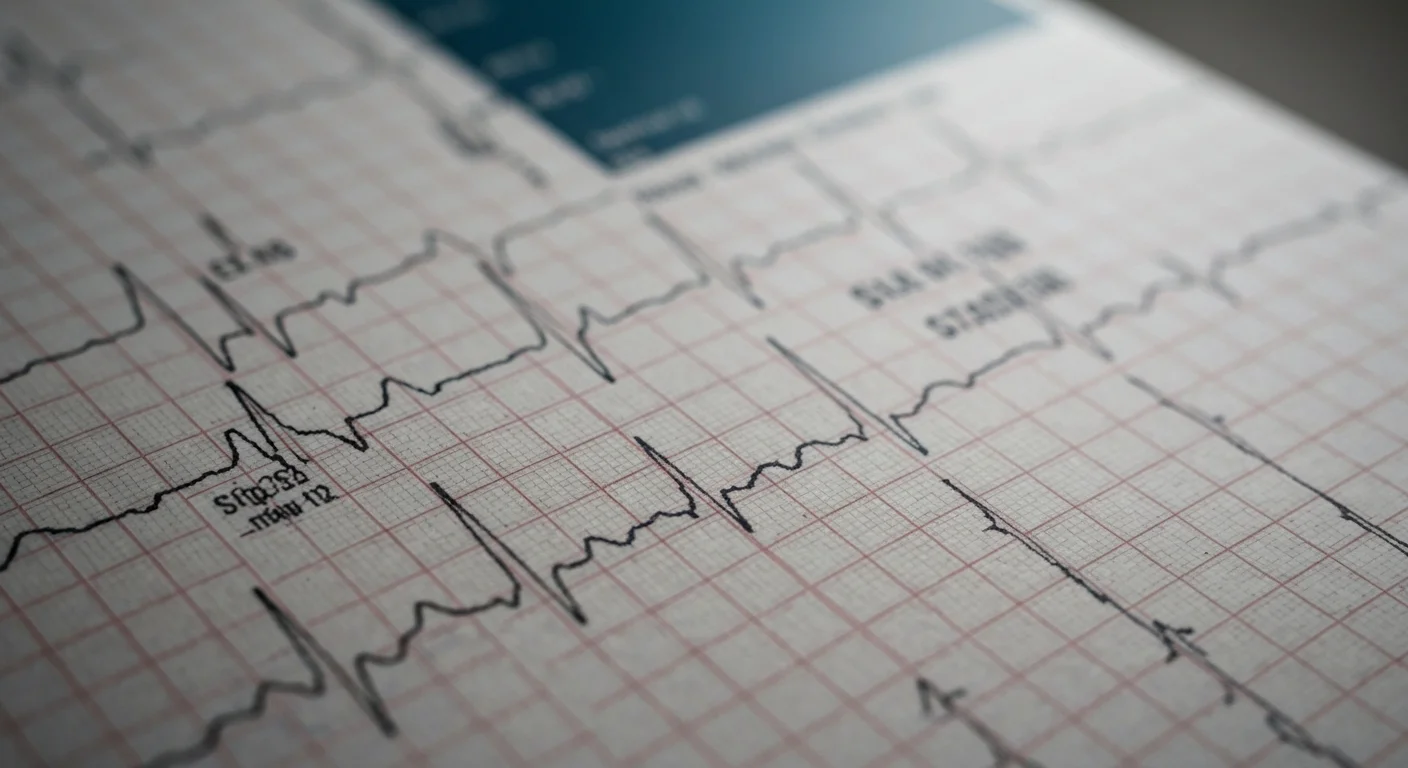
A hallmark of SSS is the alternation between slow and fast rhythms. Atrial tachyarrhythmias, particularly atrial fibrillation, often coexist with profound sinus pauses on termination of the tachycardia. This coupling complicates rate control, because drugs that suppress the fast rhythm can worsen the underlying bradycardia.
Incidence and risk factors
Population data clarify how common SSS is and who develops it. In a pooled analysis of 20,572 participants from the ARIC and Cardiovascular Health Study cohorts, 291 incident cases arose over an average 17 years, an unadjusted rate of 0.8 per 1,000 person-years.
Age is the dominant driver. The same analysis found incidence increased with a hazard ratio of 1.73 per 5-year increment in age. Risk also varied by self-reported race, with Black participants showing a 41% lower risk than white participants.
Because SSS is a common indication for pacemaker implantation, and because the population is aging, the number of affected Americans is projected to increase substantially over the coming decades. That trajectory raises the clinical value of recognizing atypical, potentially heritable presentations early.
The genetic subset
Most SSS is acquired, but inherited forms are well described and matter for younger patients. Loss-of-function variants in SCN5A, which encodes the cardiac sodium channel Nav1.5, can impair sinoatrial impulse generation and conduction, sometimes overlapping with Brugada syndrome and conduction disease phenotypes.
Variants in HCN4, encoding the pacemaker channel that carries the funny current (If), are another recognized cause of familial sinus bradycardia and SSS. These channelopathies typically present earlier, may occur without structural heart disease, and can be transmitted across generations.
When to suspect a heritable cause
- Symptomatic bradycardia or SSS in a young or middle-aged patient
- Structurally normal heart on imaging
- Family history of bradyarrhythmia, pacemaker at a young age, unexplained syncope, or sudden death
- Overlapping conduction disease or Brugada-pattern ECG findings
Where genetic testing fits
For suspected inherited SSS, a targeted panel or exome-based analysis can identify a causative variant, clarify diagnosis, and enable cascade screening of at-risk relatives. A molecular diagnosis may also refine risk stratification when the phenotype overlaps other channelopathies.
Testing complements—never replaces—clinical assessment. Electrophysiologic evaluation, ambulatory monitoring, and imaging remain central, and pacemaker decisions rest on symptoms and documented arrhythmia rather than genotype alone.
Reach a genetic diagnosis in hereditary sick sinus syndrome with 3billion’s WES. AI-driven analysis, with automated reanalysis at no additional cost when the initial result is inconclusive. Learn more below.
References
- Jensen PN, Gronroos NN, Chen LY, Folsom AR, deFilippi C, Heckbert SR, Alonso A. Incidence of and Risk Factors for Sick Sinus Syndrome in the General Population. Journal of the American College of Cardiology. 2014;64(6):531–538., DOI: 10.1016/j.jacc.2014.03.056, https://pubmed.ncbi.nlm.nih.gov/25104519/

Soo-jung Baek
Marketing Manager
I strive to empower the rare disease community by sharing meaningful insights backed by our company’s expertise.