



[Baby Care #8] The Glucose Test in Pregnancy: What to Expect

During pregnancy, your healthcare provider will recommend a number of routine screenings to monitor your health and the health of your developing baby. One of the most common is the glucose test, which screens for gestational diabetes mellitus (GDM). This is a type of diabetes that appears for the first time during pregnancy in women who did not have diabetes before.
Gestational diabetes occurs when the body cannot produce enough insulin—a hormone that regulates blood sugar—to meet the extra needs of pregnancy. While the thought of another test can be daunting, this screening is a simple and important step to ensure a healthy pregnancy for you and your child.
FAQs
Q. Why is the glucose test done in pregnancy?
A. The test screens for gestational diabetes, a temporary condition that can develop during pregnancy. If left unmanaged, it can lead to health complications for both the mother, such as high blood pressure, and the baby, such as a high birth weight.
Q. What happens if I fail the one-hour glucose test?
A. Failing the initial one-hour screening test does not mean you have gestational diabetes. It indicates that you need further testing. Your provider will order a longer, three-hour oral glucose tolerance test (OGTT) to make a definitive diagnosis.
Q. How should I prepare for the pregnancy glucose test?
A. For the one-hour screening test, you typically do not need to fast. For the three-hour diagnostic test, you will be required to fast overnight. Always follow the specific instructions provided by your clinician to ensure accurate results.
Q. Is gestational diabetes permanent?
A. No, for most women, blood sugar levels return to normal soon after delivery. However, having GDM increases your risk of developing type 2 diabetes later in life, making follow-up care and healthy lifestyle choices important.
The Two-Step Screening Process
In many regions, clinicians use a two-step approach to screen for and diagnose gestational diabetes. This process is designed to efficiently identify individuals who may be at risk without requiring everyone to undergo the longest test.
Step 1: The One-Hour Glucose Challenge Test (GCT)
The first step is a simple screening test, usually performed between 24 and 28 weeks of gestation. You will be asked to drink a sweet liquid containing 50 grams of glucose. One hour later, a blood sample is taken to measure your blood sugar level. It is a screening tool, not a diagnostic one. A systematic review concluded that while the 50-g GCT is acceptable for screening, it lacks the accuracy to replace the OGTT for diagnosis.
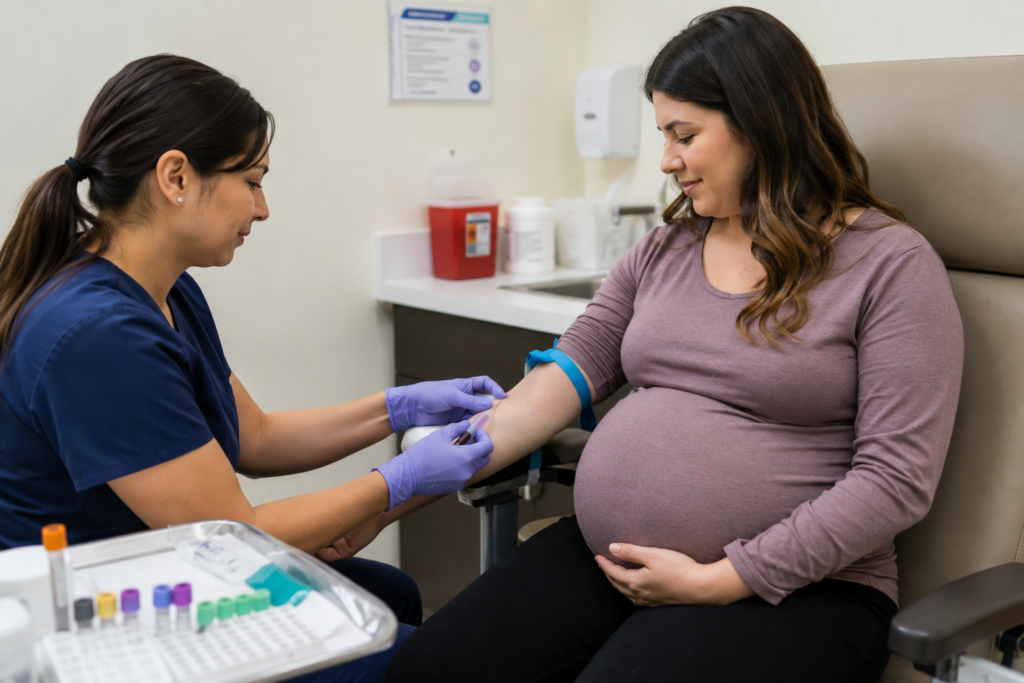
A result above a certain threshold, often between 130 and 140 mg/dL, is considered positive. The choice of threshold affects the test’s sensitivity and specificity. This means a lower threshold catches more potential cases but also results in more people needing the follow-up test.
Step 2: The Three-Hour Oral Glucose Tolerance Test (OGTT)
If your GCT result is elevated, your doctor will order an OGTT. This test is the gold standard for diagnosing GDM. You will need to fast overnight before the test. First, a baseline fasting blood sample is drawn. Then, you will drink a more concentrated glucose solution containing 100 grams of glucose. Your blood will be drawn again at one, two, and sometimes three hours after you finish the drink.
A diagnosis of gestational diabetes is made if two or more of your blood sugar readings are at or above the established cutoffs. While the two-step approach is common, some guidelines recommend a one-step approach using a 75-g OGTT for all pregnant individuals. However, a large USPSTF evidence review found this one-step method led to more GDM diagnoses without clear evidence of improved health outcomes.
What a Gestational Diabetes Diagnosis Means for You
Receiving a GDM diagnosis can be stressful, but the condition is very manageable. The goal of treatment is to keep your blood sugar levels in a healthy range for the remainder of your pregnancy. This protects both you and your baby from potential complications.
Management Strategies
The first line of treatment involves lifestyle modifications. These often include:
- Dietary Changes: Working with a registered dietitian or nutritionist to create a meal plan that balances carbohydrates, proteins, and fats to stabilize blood sugar.
- Regular Exercise: Engaging in moderate physical activity, such as walking or swimming, can help your body use insulin more effectively.
- Blood Sugar Monitoring: You will learn how to check your blood sugar at home with a glucometer to ensure your levels remain within the target range.
For some women, diet and exercise are not enough to control blood sugar. In these cases, medication such as metformin or insulin may be prescribed. These are safe to use during pregnancy and are very effective at managing GDM.
Beyond Gestational Diabetes: Supporting Your Baby’s Healthy Start
Managing gestational diabetes is an important short-term step toward a healthy pregnancy and delivery. It can also be an opportunity to look more closely at your family’s health history and consider how you may continue supporting your baby’s health after birth.
While GDM is primarily associated with hormonal and metabolic changes during pregnancy, some health conditions can have an underlying genetic cause. Reviewing your family history with your healthcare provider or a genetic counselor may help identify whether additional screening or genetic testing could provide useful information for your family.
After birth, routine newborn screening plays an essential role in identifying certain conditions before symptoms appear. For families seeking broader insights, genomic newborn screening may complement conventional screening by analyzing genes associated with serious, early-onset, and medically actionable genetic conditions.
3B-NEO, developed by 3billion, is a genomic newborn screening test designed to help identify genetic risks that may not be detected through standard biochemical screening alone. By providing additional information early in life, 3B-NEO can support timely follow-up, clinical evaluation, and informed discussions with healthcare professionals.
Genomic screening does not replace routine newborn screening or a medical diagnosis. Parents considering 3B-NEO should speak with their healthcare provider to understand whether the test is appropriate for their baby.
Learn more about 3B-NEO and how genomic newborn screening can support a healthier start.
Full series
View all

Seong Eun
Marketing Manager
I’m turning genomic insights into impact.