




Key Diagnostic Outcomes from Mexico in 2025
In 2025, 825 patients received rare disease diagnoses through 3billion in Mexico.
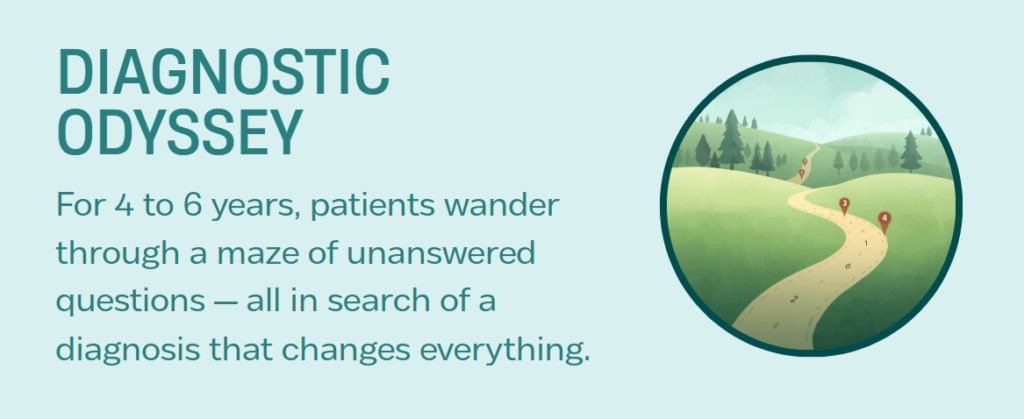
Rare disease patients wait an average of 4 to 6 years(Fatoumata Faye, 2024) before receiving an accurate diagnosis. Most spend years cycling through dozens of hospitals and undergoing countless repeated tests, only to be told the cause remains unknown. Mexico is no exception — in fact, the reality there is often far more unforgiving.
The Reality of Rare Disease Diagnosis in Mexico
Approximately 80% of rare diseases have a genetic origin, which means genetic testing is central to diagnosis. Yet in Mexico, even this basic prerequisite is difficult to meet.
A shortage of genetic specialists and inadequate infrastructure routinely delays accurate diagnosis. Genetic testing costs remain prohibitive for the majority of patients — many who understand they need testing are forced to forgo it altogether. In rural areas, accessing a diagnosis is difficult enough; obtaining follow-up care after diagnosis presents an additional barrier.
Despite all of this, 825 patients in Mexico received genetic diagnoses using 3billion’s genetic testing in 2025. How was this possible?
How It Was Made Possible: 3billion’s Approach
1. Pricing: Reaching More Patients

3billion offers WES and WGS testing at competitive price points. This is not simply a matter of price competition. It represents a meaningful shift: patients from lower-income backgrounds — the population that Mexican physicians predominantly serve, and the patients who have historically had to forgo testing due to cost — can now access genetic testing for the first time.
“3billion has been growing exponentially in Mexico by listening to the needs of the Mexican doctors. Mexico had been underserviced by previous international companies by charging high prices for genetic tests, only allowing those with the means to have access to genetic testing.
3billion changed this by disrupting the market and giving access to full WES and WGS to patients of lower income that would never have been able to reach a diagnosis.”
— Juan, 3billion Sales Lead for Mexico
2. All-Inclusive Service: No Hidden Costs

Competitive pricing does not mean reduced service. 3billion’s pricing encompasses the full scope of what a clinician needs: collection kits, logistics, reanalysis, and raw data delivery — all included in a single fee. CNV analysis and mitochondrial coverage (at over 2,000x depth) are provided as standard, whereas these are often billed separately by other providers. Repeat expansion coverage is also included; confirmatory testing, where required, is conducted separately. Through optimized DHL logistics, sample submission is accessible from anywhere across Mexico.
3. Selective Case Acceptance: The Paradox of Trust
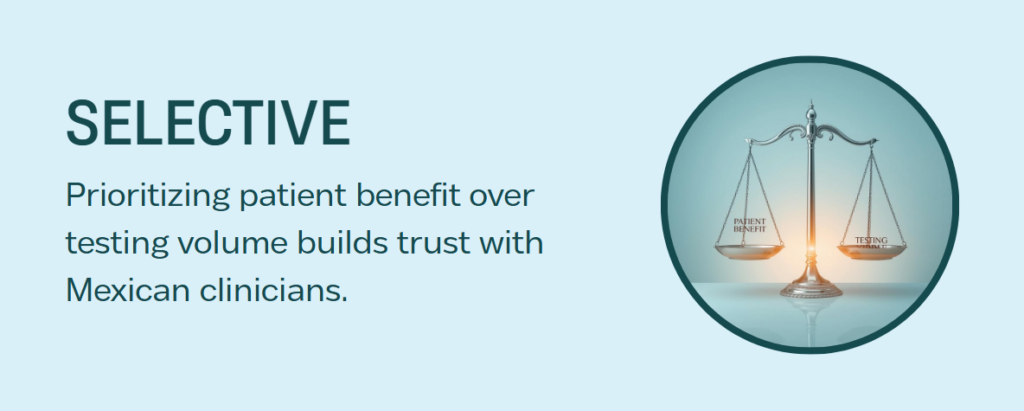
One of the features that distinguishes 3billion from other providers is, paradoxically, its willingness to decline samples. Even when a sample is technically eligible for processing, 3billion will decline the sample if the likelihood of a diagnostic outcome is judged to be low, or is best to be processed by a different method. Turning away a sample that could otherwise be accepted signals that patient benefit takes precedence over testing volume. This is one of the reasons Mexican clinicians place their trust in 3billion.
What Conditions Were Diagnosed Among the 825 Patients?
This post has shared the figure of 825 diagnoses and the factors that made it possible. For clinicians, however, the more pressing questions are likely to be:
- What are the top 3 most frequently diagnosed rare diseases in Mexico?
- What population-specific genetic variant patterns have been identified in the Mexican cohort?
- Which symptom combinations were associated with higher diagnostic yields?
All of this is documented in our three-year full data report, available at no cost to healthcare professionals and researchers.
References
Stoller, J., The Challenge of Rare Diseases. Chest, 153(6), 1309-1314 (2018).

3billion Inc.
3billion is dedicated to creating a world where patients with rare diseases are not neglected in diagnosis and treatment.