


Osteogenesis Imperfecta: Genetic Testing Solves 98% of Typical Cases
Osteogenesis imperfecta is a group of heritable disorders defined by bone fragility and recurrent fractures, ranging from mild presentations to perinatal lethality. Most cases arise from pathogenic variants in the type I collagen genes COL1A1 and COL1A2, which disrupt the structure or quantity of the collagen scaffold that mineralized bone depends on.
Frequently asked questions
Is osteogenesis imperfecta always inherited from a parent?
Not always. Many dominant OI cases arise from de novo variants. Rarer recessive forms require both parents to carry a variant. A genetic counselor can clarify recurrence risk for a given family.
Molecular basis: from collagen to phenotype
Type I collagen is the main structural protein of bone, encoded by the COL1A1 and COL1A2 genes. Variants in these genes act in two broad ways: those that reduce the amount of collagen tend to cause milder disease, while those that distort collagen’s structure tend to cause moderate-to-severe disease.
Most people with OI carry autosomal dominant variants in these two genes.
Classification and clinical spectrum
The Sillence classification divides OI into four principal groups by clinical, radiological, and genetic criteria, later expanded to include rarer, mostly autosomal recessive forms. Type I is the mildest and most common; types II, III, and IV span perinatal-lethal to progressively deforming and moderate presentations.
Distribution matters clinically. In one large cohort, OI type I was diagnosed in 43% of individuals while 57% had moderate-to-severe disease, underscoring that a substantial share of patients present beyond the mild end of the spectrum.
Extraskeletal features
- Blue or grey sclerae
- Dentinogenesis imperfecta
- Progressive hearing loss
- Ligamentous laxity and easy bruising
- Short stature and skeletal deformity in severe forms
Epidemiology and genetic architecture
Across all types, OI has a prevalence of approximately 6–7 per 100,000, and COL1A1/COL1A2-related OI represents about 80–85% of affected individuals in Western countries. In populations with high consanguinity, recessive forms are more prominent and account for a larger share of cases.
In the moderate-to-severe range the genetic architecture broadens considerably. A sequencing study of 598 individuals found causative variants across 12 different genes in moderate-to-severe OI, with 11% carrying variants in recessive genes — a reminder that a single-gene test may miss a diagnosis in these patients.
Diagnostic yield of genetic testing
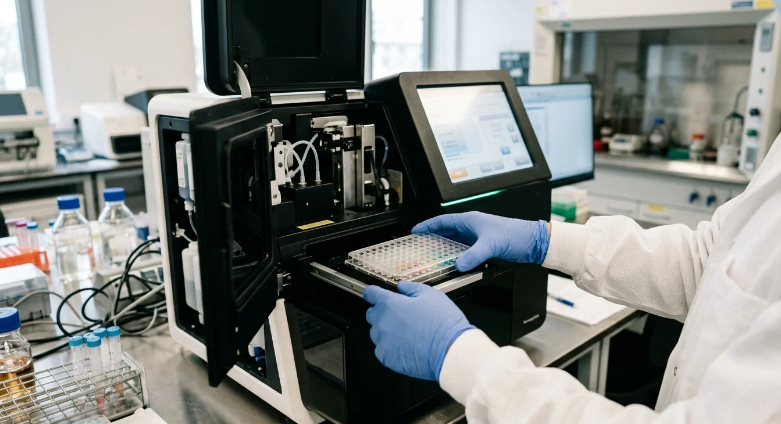
Molecular testing confirms the diagnosis, defines inheritance, and refines prognosis. In individuals with a typical OI phenotype, disease-causing variants were detected in 585 of 598 individuals (98%), with only the type I collagen genes implicated in mild OI.
Diagnostic yield tracks closely with phenotyping quality. A tertiary-centre next-generation sequencing series reported a high diagnostic yield attributed largely to accurate clinical diagnosis, reinforcing that clinical and molecular assessment work best together. Multigene panels or exome sequencing are appropriate when the phenotype is atypical or recessive disease is suspected.
Genetic testing may be worth considering in patients with recurrent fractures from minor trauma, blue sclerae, dentinogenesis imperfecta, early hearing loss, or a family history. Confirming the cause through genetic testing supports accurate genetic counseling, cascade testing, and reproductive planning.
* This article is educational and does not replace individualized medical advice. Diagnostic and management decisions should be made with a qualified clinician.
Want to learn more about
3billion's genetic testing?
We'll reply within 1 business day.
References
- Fratzl-Zelman N et al, Classification of osteogenesis imperfecta, 2015, 10.1007/s10354-015-0368-3, https://doi.org/10.1007/s10354-015-0368-3
- Bardai G et al, DNA sequence analysis in 598 individuals with a clinical diagnosis of osteogenesis imperfecta: diagnostic yield and mutation spectrum, 2016, 10.1007/s00198-016-3709-1, https://doi.org/10.1007/s00198-016-3709-1
- Coetzer KC et al, Genetic basis of osteogenesis imperfecta from a single tertiary centre in South Africa, 2023, 10.1038/s41431-023-01509-3, https://doi.org/10.1038/s41431-023-01509-3

Soo-jung Baek
Marketing Manager
I strive to empower the rare disease community by sharing meaningful insights backed by our company’s expertise.