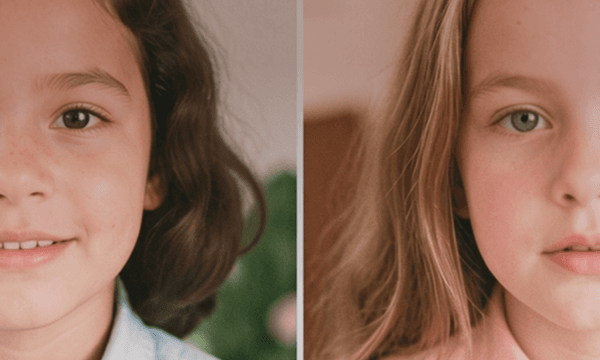



Legius Syndrome: The NF1 Mimic Hiding in Café-au-Lait Macules
Legius syndrome is a mild RASopathy caused by germline loss-of-function variants in the SPRED1 gene. It presents with multiple café-au-lait macules (CALMs) and intertriginous freckling that closely resemble neurofibromatosis type 1 (NF1) — but without neurofibromas, Lisch nodules, or nervous-system tumors.
For clinicians, the practical challenge is separation from NF1 in a young child who has pigmentary findings and nothing else. Because the pigmentary phenotype alone can satisfy NIH criteria, molecular testing frequently drives the final diagnosis and the surveillance plan that follows.
Frequently asked questions
How is Legius syndrome different from NF1?
Both share café-au-lait macules and freckling, but Legius syndrome lacks neurofibromas, Lisch nodules, optic pathway gliomas, and characteristic NF1 bone lesions. The course is milder, and the tumor risks associated with NF1 are absent.
Can Legius syndrome be diagnosed clinically?
Not reliably in young children. Pigmentary findings alone can meet NIH criteria for NF1, so about half of Legius patients would be misclassified without genetic testing to confirm a SPRED1 variant.
Is Legius syndrome inherited?
Yes. It follows autosomal dominant inheritance, meaning each child of an affected parent has a 50% chance of inheriting the variant. Some cases arise from new (de novo) mutations with no family history.
Does Legius syndrome cause learning problems?
Some children show learning difficulties, attention deficit, or speech and language delay, though these are generally milder than in NF1. Adults may develop lipomas. Presentation varies widely between individuals.
The molecular basis: SPRED1 and the Ras/MAPK pathway
The SPRED1 gene sits on chromosome 15q13.2 and encodes a 444-amino-acid protein with an N-terminal EVH-1 domain, a central KIT-binding domain, and a C-terminal SPRY domain. This protein normally inhibits the Ras/Raf/MEK/ERK cascade, placing Legius syndrome firmly within the RASopathy family alongside NF1 and Noonan syndrome.
When one copy of SPRED1 is lost, the brake on this proliferative pathway loosens. The result is the shared mechanistic thread that explains why Legius syndrome and NF1 overlap in their pigmentary features — both dysregulate the same signaling axis, just at different nodes.
Variant spectrum
The SPRED1 variant landscape is dominated by loss-of-function changes. A curated database reported a mix of 29 missense, 28 frameshift, 19 nonsense, eight copy-number, and rarer splicing and in-frame changes, of which 63 were classified as definitely or most likely pathogenic. Nearly 100 distinct mutations are now known, and — importantly for counseling — no genotype-phenotype correlations have been established.
Clinical features: a milder RASopathy
Legius syndrome presents as an autosomal dominant condition with multiple café-au-lait macules and skin-fold freckling, with or without macrocephaly, a Noonan-like facial appearance, and learning or attention difficulties in children. Adults may develop lipomas.
The defining clinical point is what is absent. Lisch nodules, neurofibromas, and central nervous system tumors — hallmarks of NF1 — do not occur in Legius syndrome. In one genotype-phenotype series of 22 unrelated SPRED1-positive probands, investigators found no symptomatic optic pathway gliomas, neurofibromas, or typical NF1 osseous lesions, with relative macrocephaly in 27% and speech or language difficulties in 25% of children.
Why the overlap with NF1 matters diagnostically
Here is the crux for clinicians: pigmentary findings alone can satisfy the diagnostic threshold for NF1. Legius syndrome patients may meet the NIH diagnostic criteria for NF1 on the basis of café-au-lait macules and freckling alone, which makes the two conditions difficult to separate in early childhood without molecular testing.
Population data reinforce this. In the same cohort study, 50% of SPRED1-positive individuals fulfilled the NIH NF1 criteria, a figure echoed by Orphanet’s estimate that about half of Legius patients meet NF1 criteria while following a far milder course.
Detection rates in NF1-negative populations
When patients carry NF1-like signs but no detectable NF1 mutation, SPRED1 becomes the logical next step. A large cross-sectional study of 1,318 such unrelated patients identified pathogenic SPRED1 mutations in 33 probands, with a 19% detection rate among families showing an autosomal dominant phenotype. Smaller series have reported similar yields — for example, five SPRED1 probands among 61 index cases in one report and six among 85 NF1-negative patients without cutaneous neurofibromas in another.
Implications for testing and counseling
A confirmed SPRED1 diagnosis changes the conversation. It removes the tumor-surveillance burden tied to NF1 — no routine ophthalmologic screening for optic pathway gliomas, no neurofibroma monitoring — and reframes prognosis toward a milder trajectory.
Because inheritance is autosomal dominant, each child of an affected parent carries a 50% recurrence risk, and cascade testing can clarify status across a family. When a child presents with isolated café-au-lait macules and freckling, a broad RASopathy panel or exome analysis that includes both NF1 and SPRED1 is the most efficient path to a definitive answer.
When to consult
Consider genetic evaluation for any patient meeting pigmentary NF1 criteria without other diagnostic features, or where family history suggests dominant inheritance of café-au-lait macules alone. A clinical geneticist or genetic counselor can guide test selection, variant interpretation, and family cascade planning.
* This article is educational and does not replace individualized medical advice. Diagnostic decisions should be made with a qualified clinician who can review the full clinical picture.
3billion’s whole exome sequencing (WES) also examines mtDNA without requiring a separate test, and if no diagnosis is identified in the initial test, reanalysis is performed automatically. Click the button below to learn more about 3billion’s genetic testing.
Find the testing solution that's right for you.
References
- Bianchi M, et al., Legius Syndrome: two novel mutations in the SPRED1 gene, 2015, DOI: 10.1038/hgv.2015.51, https://pmc.ncbi.nlm.nih.gov/articles/PMC4785569/
- Brems H, et al., Review and update of SPRED1 mutations causing Legius syndrome, 2012, DOI: 10.1002/humu.22152, https://pubmed.ncbi.nlm.nih.gov/22753041/
- Orphanet, Legius syndrome, 2023, https://www.orpha.net/en/disease/detail/137605
- Sumner K, et al., The SPRED1 Variants Repository for Legius Syndrome, 2011, DOI: 10.1534/g3.111.000687, https://www.ncbi.nlm.nih.gov/pmc/articles/PMC3276167/

Soo-jung Baek
Marketing Manager
I strive to empower the rare disease community by sharing meaningful insights backed by our company’s expertise.