


Genetic Testing for Epilepsy: What Patients & Families Should Know
Genetic testing for epilepsy looks for changes in your DNA that explain why seizures happen. For many families, it turns an unexplained condition into a named diagnosis with a clear path forward. Studies report that testing finds a cause in 10% to 40% of people with epilepsy, depending on age, seizure type, and the test used.
A diagnosis is not just a label. In some cases it points directly to a treatment that works better than trial-and-error medication. This guide explains what these tests do, who benefits most, and how to talk to your care team.
Frequently asked questions
Can genetic testing find the cause of my epilepsy?
Sometimes. Genetic testing identifies a cause in about 10-40% of people with epilepsy. Yield is highest in infants, in severe (drug-resistant) epilepsy, and when seizures come with developmental delay. Your clinician can estimate the odds for your case.
Which genetic test is used for epilepsy?
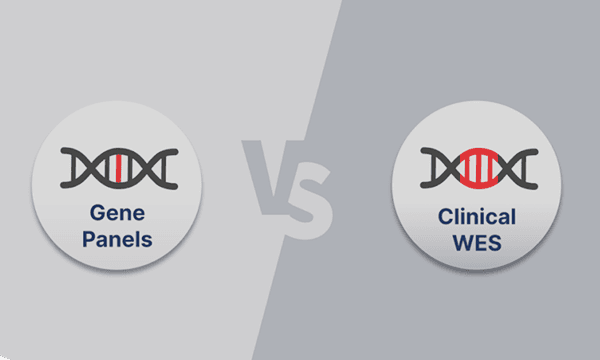
The most common options are an epilepsy gene panel and exome sequencing. Panels read a curated set of epilepsy genes; exome sequencing reads all protein-coding genes. Both perform similarly in many studies, and your team chooses based on your symptoms.
Does a genetic diagnosis change treatment?
It can. In one infant cohort, a molecular diagnosis changed clinical management in 43% of cases. Certain genetic epilepsies respond to specific drugs, diets, or vitamins that standard therapy would not identify.
What is trio testing?
Trio testing sequences the affected person plus both biological parents at the same time. Comparing all three makes it easier to tell whether a DNA variant is newly arisen (de novo) and disease-causing versus harmless inherited variation.
Will a normal result mean I don’t have a genetic cause?
Not necessarily. A negative result lowers the chance of a detectable genetic cause but does not rule it out. Genes are still being discovered, and reanalysis of your data years later can sometimes yield a diagnosis.
How genetic changes cause epilepsy
Seizures happen when brain cells fire in an uncontrolled, synchronized way. Many genes control that electrical balance, so a single altered gene can tip the brain toward seizures.
The largest group involves ion channels — proteins that let charged particles flow in and out of neurons. In one study of children with unexplained epilepsy, ion channel genes accounted for the largest share of mutations (30.8%). Genes like SCN1A and KCNQ2 are frequent culprits, and each connects to a recognizable clinical picture.
Epilepsy is genetically diverse. Broad testing often outperforms checking one gene at a time.
What genetic testing can and cannot tell you
A positive result names the gene involved and, often, the specific variant. That can clarify prognosis, recurrence risk for future children, and — importantly — treatment options.
A negative or uncertain result is also common. Around 25% of people in large, broadly defined epilepsy cohorts receive a diagnosis, meaning many do not get a clear answer on the first pass. That reflects the limits of current knowledge, not a failure of your care.
Why yield varies so much
Age and severity drive the numbers. In one study of 103 infants with drug-resistant epilepsy, exome sequencing as the first test reached a diagnostic yield of 64%, far above the general epilepsy average. The most severe forms score highest: patients with epileptic encephalopathies had a positive rate of 43.4% in one large diagnostic study.
How a diagnosis can change treatment
This is where genetic testing moves from academic to life-changing. Standard epilepsy drugs fail in 30-40% of patients, and for some of them the reason is a specific genetic cause that calls for a different approach.
In the infant cohort above, a molecular diagnosis changed clinical management in 43% of cases, and 35% had genetic defects that guided gene-specific treatment. Pyridoxine-dependent epilepsy — treatable with vitamin B6 — was the single most common treatable form. Without a genetic test, that diagnosis is easy to miss.
Types of tests
- Epilepsy gene panel — sequences a curated list of known epilepsy genes. Fast and focused.
- Exome sequencing — reads all protein-coding genes, catching causes outside a fixed panel.
- Genome sequencing — reads coding and non-coding DNA; sometimes used after a negative exome.
- Chromosomal microarray — detects large deletions or duplications (copy-number variants).
In one pediatric cohort, yields were 40.0% for exome-based epilepsy panels and 27.8% for whole exome sequencing. Copy-number changes matter too: one trio study found a CNV diagnostic yield of 12.5%, so tests that detect both small and large changes give the fullest picture.

When to consider testing
Testing is worth discussing when seizures begin in infancy or early childhood, when they resist medication, or when they come with developmental delay, autism, or other features. Even among broader groups, exome testing identified a cause in 19.2% of people with unexplained pediatric-onset epilepsy — and in 31.7% of those with developmental and epileptic encephalopathy.
Timing also matters. Getting a genetic answer early can shorten the diagnostic journey and, in treatable cases, start the right therapy sooner.
Talk to your clinician
Genetic testing is a decision to make with a clinician or genetic counselor, not alone. They can weigh your specific history, explain what a result would mean for you and your family, and interpret findings — including the uncertain ones — in context.
Genetic testing can feel unfamiliar — where do you start? Click the button below to learn about the testing process and find answers to frequently asked questions.
References
- Jiang YL, et al., Clinical Utility of Exome Sequencing and Reinterpreting Genetic Test Results in Children and Adults With Epilepsy (2020), Front Genet, https://pmc.ncbi.nlm.nih.gov/articles/PMC7775549/
- Rochtus A, et al., Genetic diagnoses in epilepsy: The impact of dynamic exome analysis in a pediatric cohort (2020), Epilepsia, https://pmc.ncbi.nlm.nih.gov/articles/PMC7404709/
- Boonsimma P, et al., Exome sequencing as first-tier genetic testing in infantile-onset pharmacoresistant epilepsy: diagnostic yield and treatment impact (2023), Eur J Hum Genet, https://pubmed.ncbi.nlm.nih.gov/36198807/
- Zou H, et al., Diagnostic efficiency of exome-based sequencing in pediatric patients with epilepsy (2025), Front Genet, https://pmc.ncbi.nlm.nih.gov/articles/PMC11790612/
- Li C, et al., Identification of genetic causes in children with unexplained epilepsy based on trio-whole exome sequencing (2024), Clin Genet, https://pubmed.ncbi.nlm.nih.gov/38468460/
- Koh HY, et al., Utility of Exome Sequencing for Diagnosis in Unexplained Pediatric-Onset Epilepsy (2023), JAMA Netw Open, https://pmc.ncbi.nlm.nih.gov/articles/PMC10359957/
- Helbig KL, et al., Diagnostic exome sequencing provides a molecular diagnosis for a significant proportion of patients with epilepsy (2016), Genet Med, https://www.nature.com/articles/gim2015186
- Demos M, et al., Diagnostic Yield and Treatment Impact of Targeted Exome Sequencing in Early-Onset Epilepsy (2019), Front Neurol, https://pmc.ncbi.nlm.nih.gov/articles/PMC6536592/

Soo-jung Baek
Marketing Manager
I strive to empower the rare disease community by sharing meaningful insights backed by our company’s expertise.