


Meet the Clinician ② Not Missing It — Five Fabry Patients in One Family

Sookjin Lee
Chief Business Officer (CBO) | Ph.D.
A business expert leading innovation in precision medicine and genomics for 20 years. Accelerating the commercialization of innovative technologies with academic expertise and market insight.
Diagnosing Fabry disease, and the humility that comes with knowing more
In part one, Professor Junhwa Lee noted that only about 5% of genetically diagnosed conditions have an approved therapy. So what happens in the conditions that do have one? How decisive is the diagnosis then? Part two starts with a disease inside that 5% — Fabry disease. These cases came out of a diagnostic support program for rare metabolic disorders.

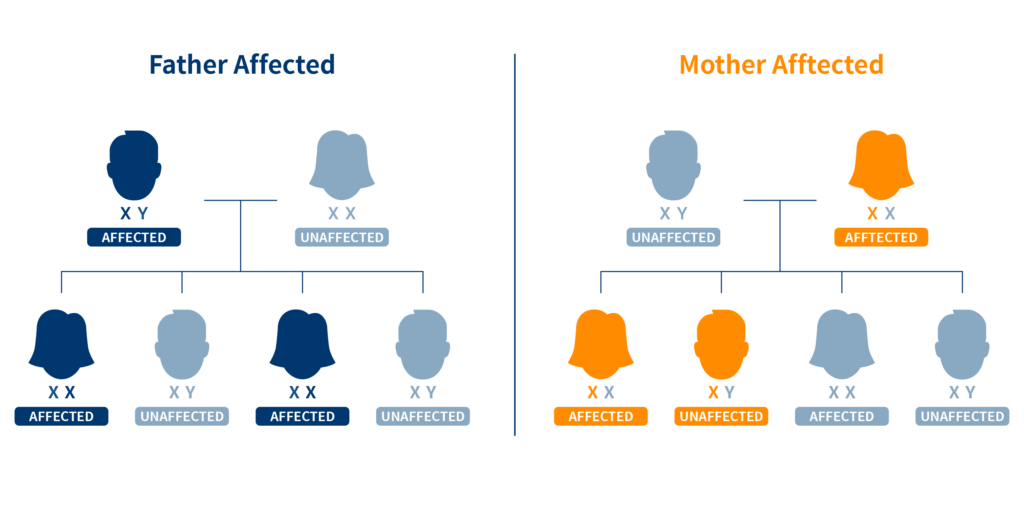
I heard you recently identified several Fabry disease patients within one family. We found five in a single family. Fabry is X-linked, so once one person is diagnosed, you can look ahead and identify relatives who may be affected. That case made it real for me. Some of them have not yet reached clinical confirmation.
In a pediatric patient, what first makes you think this could be Fabry? Where do pediatricians tend to miss it?

Awareness of inherited metabolic disease has shifted a great deal on the neurological, cardiac, and renal side. Genetic testing feels routine there now. What gets missed is ophthalmology and dermatology. Fabry is a metabolic disease, but it surfaces across every organ system, and that scatter delays the diagnosis.
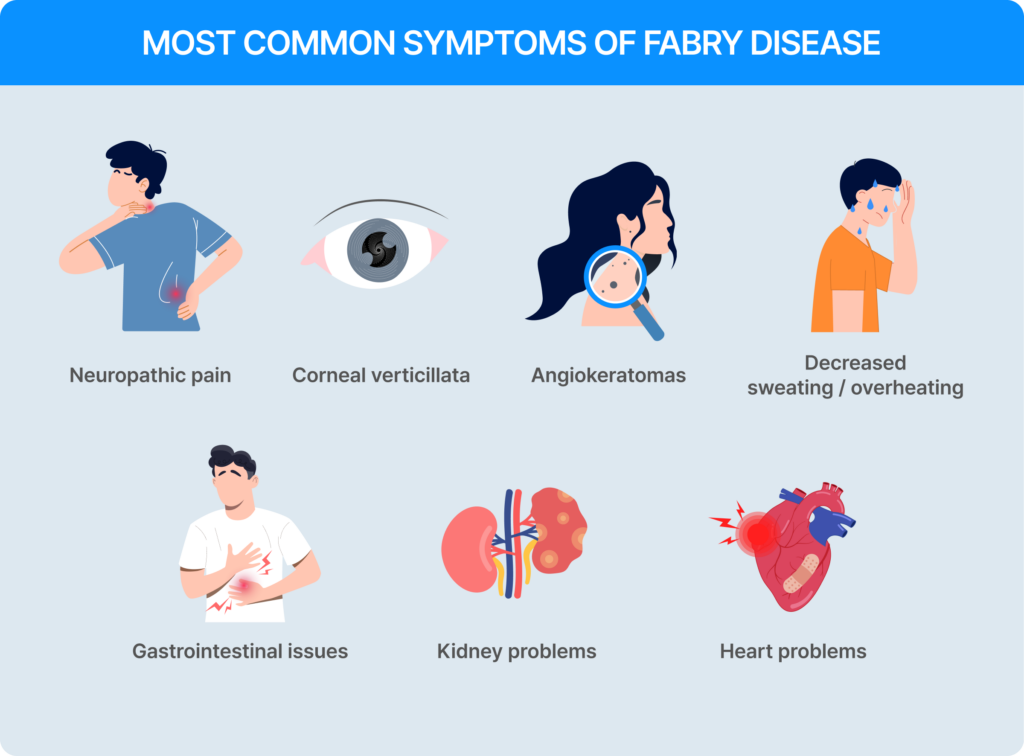
About 70% of patients with Fabry show a clear ocular finding. If a patient has cornea verticillata, they need to be tested. We had a recent case at our hospital that came through a referral from ophthalmology. The finding doesn’t affect vision, so patients never notice it themselves. A distinctive whorl-like corneal opacity, or unusually tortuous vessels, is enough to raise Fabry.
The other one is dermatology. Angiokeratomas should prompt suspicion. They are small red to purple lesions from abnormally dilated dermal vessels, and they cluster in what we call the bathing-suit distribution — around the umbilicus, buttocks, and groin. Anhidrosis or hypohidrosis often comes with them.
Simple hemangiomas appear with age, so that alone means little. But if an adolescent or young adult has dark red lesions clustered around the umbilicus and groin, sweats poorly, can’t tolerate heat, and describes burning or tingling pain in the hands and feet, consider Fabry. Acral pain gets read as growing pains or functional pain. What helps you separate it is whether that pain travels together with autonomic signs or a skin finding like angiokeratoma.
Do you ever reach a Fabry diagnosis when Fabry wasn’t on the list to begin with?
When symptoms scatter the way Fabry’s do, you can’t narrow to a targeted test at the start. Exome sequencing looks at every gene at once. It casts a wide net, and sometimes that is exactly what decides the case — even when Fabry was never a leading candidate.
We see that often too — patients treated for another diagnosis for years, who only learn they have Fabry by chance. By then some of them have already lost much of the benefit the therapy could have given. What actually changes when you diagnose a child early?
That is why timing matters so much in Fabry. It is one of the few metabolic diseases with a targeted therapy: enzyme replacement therapy, and for certain variants, an oral chaperone (migalastat).
The problem is that renal, cardiac, and cerebral damage accumulates silently over decades, usually without symptoms. Once irreversible damage like fibrosis is established, you cannot undo it. So the objective is to intervene before that point.
If you diagnose a child, you don’t have to start therapy immediately. You monitor renal, cardiac, and neurological status on a schedule, and you don’t miss the window to begin. There are reports that boys who started ERT before irreversible damage had fewer renal and cardiac complications in adulthood. Start after the damage is established, and the achievable benefit shrinks.
And as in the family case — because Fabry is X-linked, one diagnosis lets you identify relatives who have no symptoms yet and start following them. You aren’t only timing one patient’s treatment. You are opening an early-intervention window for the whole family. Fabry is a disease where the diagnosis leads directly to a next action, and that is what makes early diagnosis decisive here.
How do you view newborn screening for Fabry?
Since January 2024, Korea has covered six lysosomal enzyme assays in its national newborn screening program — the first government-led LSD newborn screening in the world. Fabry disease is one of the conditions included, and I expect earlier diagnosis as a result. But screening panels differ by country and region. Where Fabry isn’t included, clinical suspicion is still the first gate.
Closing — as a physician, and as someone further along
A personal question. Of all the specialties, why pediatrics?
Every specialty has its own rewards. But with the same clinical work, when you treat a child and that child lives, you think about all the years ahead of them. That is where I find the most meaning. I have felt it constantly in pediatrics. It may sound idealistic, but looking back over the years, I think it is considerable good fortune to do work you find worth doing. There are hard days. I am still grateful to be able to do it.
That resonates. I’ve been asking myself lately what all the effort has ultimately been for.
I reread Faust recently, and passages I’d missed before landed hard this time. Faust has mastered everything a person can study — philosophy, law, medicine, theology — and still finds himself at the limits of learning, unable to reach any fundamental truth. He grieves over it.
What it comes to is knowing that we can know nothing. Understanding that what I know is not all there is. Setting down the weight of having to know everything — that turned out to be humility toward the world. The more I study, the more I see how much I don’t know. Once I recognized that, I found I could take in new things more lightly, and I’ve grown more comfortable with learning.
He made time in a full schedule to receive me — as a partner, and as someone further along in life. He shared his thinking, a meal, and the places he cares about. I left that day feeling both encouraged and useful.
He meets his patients with real seriousness. I came away resolved that we would meet ours the same way.
Part one, From Ugly Duckling to True Partner, covers how a five-year collaboration began.
FAQ
Q. What are the early signs of Fabry disease in a pediatric patient?
Neurological, cardiac, and renal findings are relatively well recognized. What gets missed sits in ophthalmology and dermatology: cornea verticillata, angiokeratomas, anhidrosis or hypohidrosis, and burning pain in the hands and feet. Acral pain is often read as growing pains, so check whether it travels together with autonomic signs or a skin finding.
Q. Should cornea verticillata prompt testing for Fabry disease?
Yes, consider testing. It is reported in over 70% of adult Fabry patients and does not affect vision, so patients never notice it themselves. In children it appears in roughly half of cases, which means a normal eye exam does not rule Fabry out.
Q. How do you distinguish angiokeratomas from common hemangiomas?
Simple hemangiomas appear with age, so they mean little on their own. Fabry angiokeratomas cluster in the bathing-suit distribution — around the umbilicus, buttocks, and groin. In an adolescent or young adult with that distribution who also sweats poorly and cannot tolerate heat, consider Fabry disease.
Q. Can genetic testing lead to a Fabry diagnosis when Fabry was not suspected?
Yes. Because Fabry symptoms scatter across organ systems, narrowing to a targeted test at the outset is difficult. Exome sequencing examines every gene at once, so it can reach the diagnosis even when Fabry was never a leading candidate. Patients treated for another diagnosis for years are sometimes identified this way.
Q. Does diagnosing Fabry disease in childhood change the prognosis?
Fabry is one of the few metabolic diseases with a targeted therapy — enzyme replacement therapy, and an oral chaperone for certain variants. Renal, cardiac, and cerebral damage accumulates silently over decades, and once fibrosis is established it cannot be reversed. Reports indicate that boys who started ERT before irreversible damage had fewer renal and cardiac findings in adulthood.
Q. What happens to the family after one member is diagnosed?
Fabry disease is X-linked, so one diagnosis lets you identify relatives who have no symptoms yet and begin following them. In one family, five patients were identified this way. Female relatives can develop substantial clinical manifestations and should be included in the evaluation.
Q. If newborn screening covers Fabry disease, does clinical suspicion still matter?
Yes. Korea added six lysosomal enzyme assays to its national newborn screening program in January 2024, but screening panels differ by country and region. Where Fabry disease is not included, clinical suspicion remains the first gate to diagnosis.
Full series
View all
- Meet the Clinician ① From Ugly Duckling to True Partner
- Meet the Clinician ② Not Missing It — Five Fabry Patients in One Family