


 Back to List
3billion Eyes Big Pharma Licensing After a Decade in Rare Disease Diagnostics
- [Interview] 3billion CBDO Pavel Printsev on advancing two oncology and three immunology programs focused on oral small-molecule drugs
- Search for genes that suppress disease onset completed using genomic data from more than 120,000 individuals
- Co-development agreement signed with DeepLife to predict target effects using virtual cells and validate them experimentally
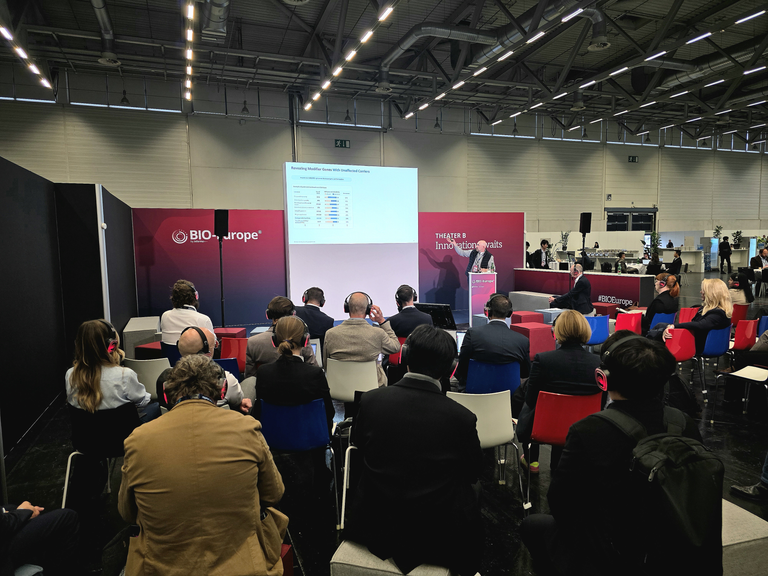
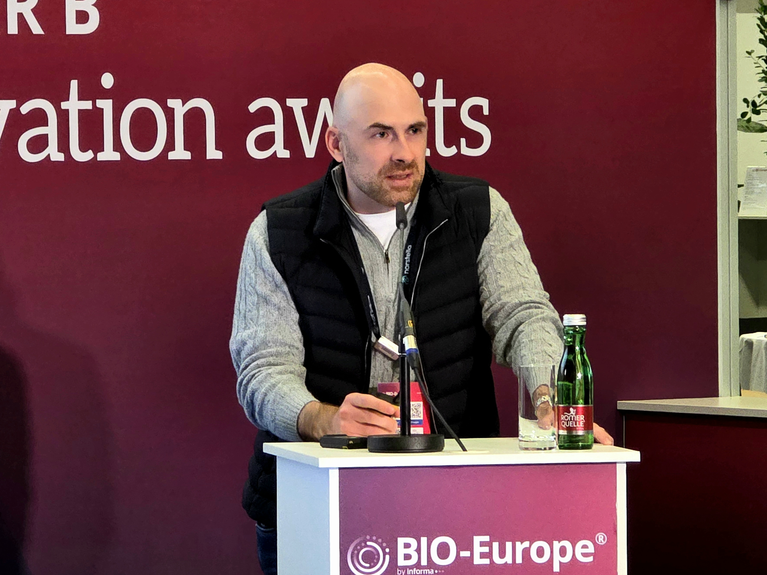
Rare disease diagnostics company 3billion is searching for therapeutic targets by analyzing genomic information from more than 120,000 individuals alongside their clinical symptoms, drawing on data accumulated over the past decade.
The starting point is that people with the same disease-causing variant can have different outcomes. Some develop the disease, while others remain unaffected or have milder symptoms. If a variant in another gene reduces the effects of the disease-causing variant, a drug may be able to reproduce that protective effect. A gene that existing treatments have yet to target could also create an opportunity for a first-in-class drug.
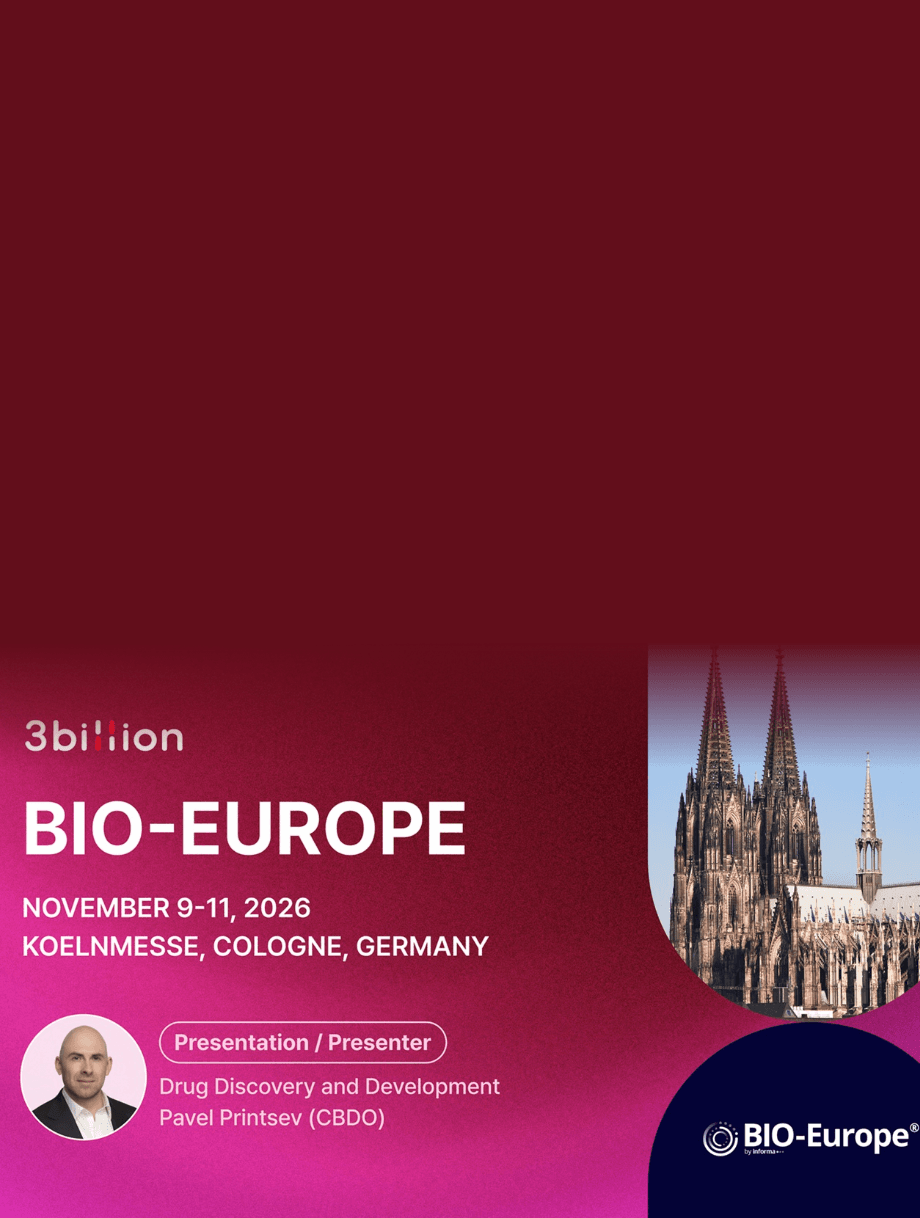
An example presented by 3billion at BIO-Europe 2026 involved osteogenesis imperfecta, a rare condition that causes bones to fracture easily. Among 83 individuals in its database with pathogenic variants in COL1A1, 32 had osteogenesis imperfecta and 51 did not. The researchers compared the two groups to identify variants that were more common among the 51 unaffected individuals. Those findings helped narrow down candidate genes that may have prevented the disease from developing.
For pharmaceutical companies seeking new therapeutic targets, 3billion can propose genes to pursue together with evidence of their effects in people. With companies that have already selected a target protein, it can identify sites where drug binding could alter the protein’s function and design compounds for those sites.
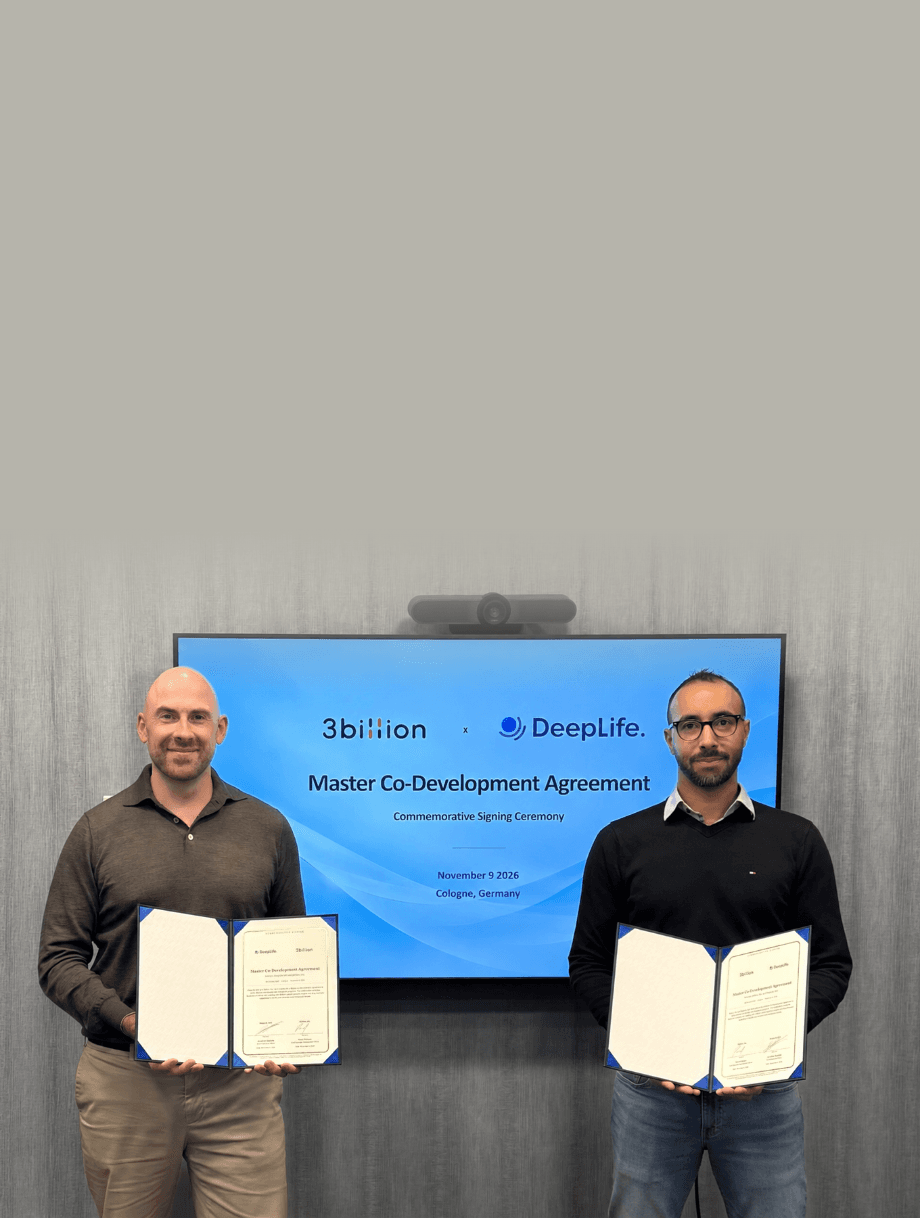
At the event, 3billion announced a co-development agreement with DeepLife, a French AI drug discovery company. The partners will use virtual cell models to predict how modulating a target changes diseased cells and test those predictions experimentally.
3billion is advancing two oncology programs and three immunology programs, all focused on oral small molecules. Its most advanced in-house program is at the lead identification stage. Initial experiments have confirmed that the compounds act on their target proteins, and early efficacy has also been observed.
To build the evidence needed for out-licensing discussions with global pharmaceutical companies, 3billion plans to optimize its leads and assess whether they show efficacy in vivo. The company will also evaluate pharmacokinetic properties, including how the compounds are absorbed, distributed, metabolized, and excreted, as well as nonclinical safety.
Yakup Shinmun spoke with Pavel Printsev, Chief Business Development Officer (CBDO) and head of 3billion’s drug discovery business, about how the company selects targets from genomic data and what evidence it needs before proposing out-licensing agreements to global pharmaceutical companies.
Q. You are using genomic data from more than 120,000 individuals and over 600,000 clinical case records. How does genetics-based AI drug discovery differ from conventional approaches, and what advantages does your patient data offer?
Conventional AI drug discovery often focuses on accelerating the design of drug candidates against established targets. We begin with target discovery. We compare the genomes of individuals who carry the same disease-causing variant but differ in whether they develop the disease or how severe their symptoms are. We look for genetic modifiers that prevent disease or reduce its severity. The targets we identify come with human genetic evidence from the outset. Many are previously unrecognized targets, creating opportunities for first-in-class drugs.
Most of our genomic data come from rare disease patients, and each genome is linked to clinical information. This lets us compare individuals who have no symptoms or mild symptoms with those who develop the disease, even when they share the same disease-causing variant. That kind of analysis is difficult with general population data alone. Targets supported by human genetic evidence have been associated with a higher likelihood of success in clinical development.
Q. What are the advantages of using genetic modifiers as therapeutic targets?
Genetic modifiers are genes that influence whether and how severely a disease develops among individuals with the same disease-causing variant. They can point to ways to treat a disease without directly correcting the variant or targeting the disease-causing protein. This can be particularly valuable when that protein is difficult to drug or when changing its function raises concerns about toxicity.
3billion is well positioned to discover genetic modifiers because we can compare individuals who have the same disease-causing variant but different symptoms. Those differences provide a basis for exploring new therapeutic targets.
Q. You use your proprietary AI technology, MIN-T, for compound design. How do you identify drug-binding sites before that step, and what results have you seen with the compounds?
MIN-T is one of the technologies within 3billion’s AI drug discovery platform. We use the AI variant interpretation capabilities developed through our diagnostic work to identify new drug-binding sites. Mapping disease-causing variants onto a protein’s structure helps us identify regions that are important to its function.
A pocket that can accommodate a drug offers limited therapeutic potential if binding there has no effect on the protein’s function. We therefore look for sites where a drug can both bind and alter protein function. We have observed early compound activity in several of our in-house programs. These results suggest that compounds may bind to the sites we have identified and modulate protein function.
Q. What stage has your most advanced in-house oncology or immunology program reached? What additional evidence is needed for out-licensing?
Our most advanced in-house program is at the lead identification stage. We have confirmed that the compounds under development act on their target proteins and have observed early efficacy. For out-licensing to a global pharmaceutical company, we need sufficient evidence that a compound can be developed into a drug. Our next steps are to complete lead optimization and assess in vivo efficacy, pharmacokinetic properties, and nonclinical safety.
Q. How does your rare disease diagnostics business relate to the diseases you will address through co-development?
Our rare disease diagnostics business provides the foundation for this research. We use genomic and phenotypic data from a large rare disease patient population to discover genetic modifiers. The biology we uncover with DeepLife may also apply more broadly to other diseases. The collaboration is designed to discover and develop therapeutic targets across multiple diseases.
Q. How did the collaboration with DeepLife begin, and what role will each company play?
We first met at the BIO International Convention (BIO USA) in June. We were looking for a partner that could help explain how the genetic modifiers we find in patient genomes work inside diseased cells. DeepLife’s virtual cell platform, TwinCell, was a good fit for that purpose.
3billion contributes genomic data from more than 120,000 individuals, expertise in modifier-based target discovery, and AI-driven drug design. DeepLife builds disease-specific virtual cell models to predict how those targets affect disease. The human genetic evidence we obtain from our diagnostic work provides a starting point for the models. Promising targets are then validated experimentally, and 3billion leads compound discovery and optimization.
Q. How will the co-development programs relate to your in-house drug pipeline?
They build on the same foundation. We use genetic evidence from our patient data at every stage, from target discovery to identifying drug-binding sites, and design compounds with our own AI technology. DeepLife adds insight into how each target works inside cells.
That information helps refine both target selection and compound design. The co-development programs will run alongside our in-house programs. Working with a partner allows us to advance more programs at the same time.
Q. At BIO USA in June, you mentioned co-development in 2026 and the possibility of out-licensing in 2027. How far have the collaboration discussions progressed, and how do you view the timing of out-licensing?
At BIO USA, we saw demand for drug co-development from companies and research institutions around the world. We received a range of proposals and focused on selecting partners that could best complement our technologies and capabilities. That led to the co-development agreement we had aimed to secure this year, and we presented the collaboration and joint research plans at BIO-Europe.
When expanding partnerships, we place the greatest emphasis on the scientific rationale for the research and the partner’s capabilities. If a partner can complement our technology and deliver tangible research results, we will move quickly to define how we work together and pursue co-development. This agreement is a first step. We believe out-licensing opportunities can be pursued as the co-development and in-house programs approach the IND-enabling stage, when the nonclinical studies needed to support an investigational new drug application are conducted.
Q. What further collaborations are you pursuing with global pharmaceutical companies and biotechnology companies?
Pharmaceutical companies and biotechnology companies have different capabilities and resources, so the way we collaborate will vary. For a company with deep expertise in a particular disease, we can propose therapeutic targets identified from patient genomic data. For a company that already has a target but faces challenges in developing a drug against it, we can begin by identifying binding sites that modulate protein function and designing compounds.
Companies with AI or disease modeling platforms, such as DeepLife, are also important potential partners. In each case, 3billion participates as a co-developer. Each partner takes responsibility for the areas in which it has strengths, and we make key decisions together at each stage of development.
Q. What is the ultimate goal of these co-development partnerships?
To create drug programs that pharmaceutical companies want to develop further. That requires targets backed by human genetic evidence, a clear mechanism of action, and drug candidates designed specifically against those targets. We aim to advance the programs to an agreed stage and then work with pharmaceutical partners to take them into clinical development.
Full interview: https://www.yakup.com/news/index.html?mode=view&cat=12&nid=335598
Get exclusive rare disease updates
from 3billion.

3billion Inc.
3billion is dedicated to creating a world where patients with rare diseases are not neglected in diagnosis and treatment.