



When Hypotonia Meets Absent Speech: Phelan-McDermid Syndrome
Phelan-McDermid syndrome is a neurodevelopmental disorder caused by haploinsufficiency of SHANK3, a gene on the long arm of chromosome 22 (22q13.3). Most patients carry a terminal deletion spanning SHANK3; a minority carry pathogenic point variants within the gene itself.
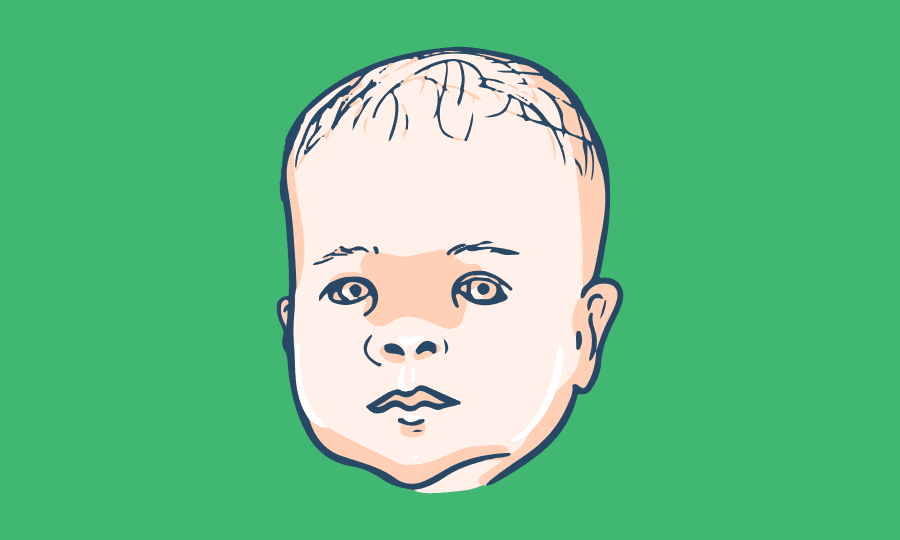
The clinical signature — hypotonia in the newborn period, delayed or absent speech, intellectual disability, and autistic features — should prompt genetic evaluation. Confirmation rests on chromosomal microarray, sequencing, and sometimes karyotype to detect ring chromosome 22.
Frequently asked questions
Is autism common in Phelan-McDermid syndrome?
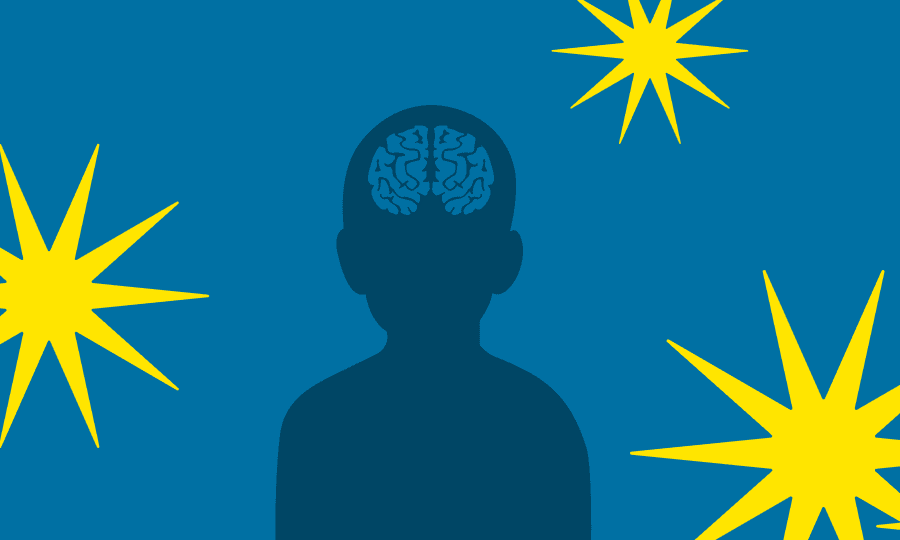
Yes. Autism spectrum disorder is highly prevalent in PMS, with estimates that a large majority of children meet diagnostic criteria. Speech deficits, intellectual disability, and hypotonia frequently accompany the autistic phenotype.
Does deletion size predict severity?
Larger deletions tend toward more severe phenotypes because additional genes are disrupted, but the relationship is imperfect. Individuals with small deletions or single-gene SHANK3 variants can still show significant intellectual disability and autism.
The genetic basis: SHANK3 and 22q13.3
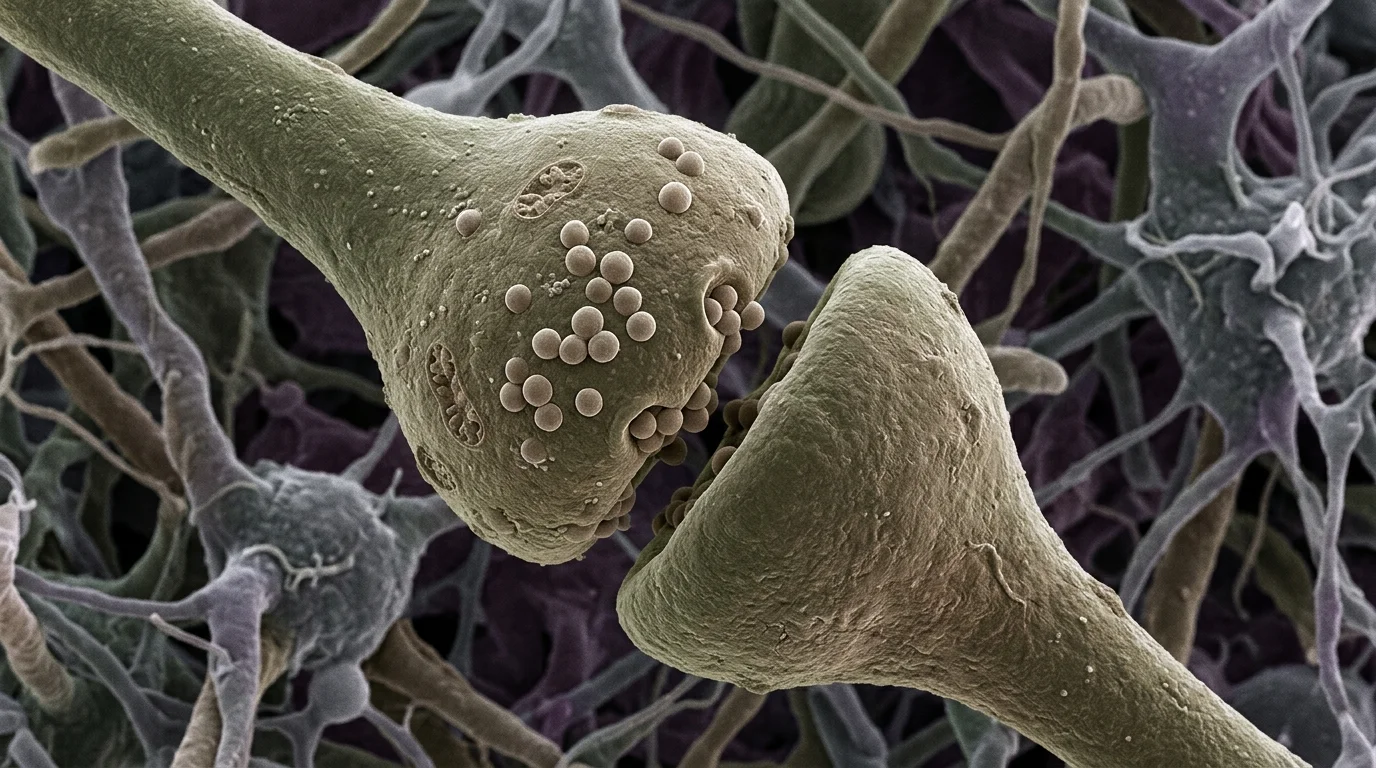
PMS corresponds to OMIM 606232 and typically arises from deletions in the 22q13.3 region affecting SHANK3. The gene product is a master scaffolding protein anchoring receptors and signaling machinery within the postsynaptic density.
Experimental and clinical evidence establish that haploinsufficiency of SHANK3 — through intragenic deletion or point mutation — is sufficient to produce the core neurobehavioral phenotype. This positions SHANK3 as the critical driver even within larger contiguous deletions.
Deletion size, however, spans a remarkable range. Reported segments run from 100 kb to over 9 Mb, with a minimum region of overlap of roughly 90 kb. Larger terminal deletions can disrupt up to 108 protein-coding genes, contributing to phenotypic variability.
Defining PMS by SHANK3 involvement
GeneReviews defines Phelan-McDermid syndrome as the disorder arising from an alteration of SHANK3 — whether a deletion spanning the gene or a pathogenic point variant within it. Deletions of the adjacent 22q13.3 region that spare SHANK3 are considered a separate entity with a distinct clinical picture, distinguished from PMS. Anchoring the diagnosis to SHANK3 involvement sharpens genotype-phenotype interpretation.
Clinical phenotype
The classic presentation is consistent across cohorts. The original delineation described severe neonatal hypotonia (>97%), global developmental delay (>98%), normal to accelerated growth (95%), and absent to severely delayed speech (>98%), alongside minor dysmorphic features.
A mainland Chinese cohort combining deletions and SHANK3 mutations reported speech delay in 100%, developmental delay or intellectual disability in 88%, autism spectrum disorder in 80%, hypotonia in 83%, and hyperactivity in 83%. These figures reinforce the tight clustering of features.
Autism spectrum disorder
Autism is a defining comorbidity. Estimates suggest up to 84% of children with PMS meet criteria for autism spectrum disorder. Clinicians evaluating a child with unexplained ASD plus hypotonia and speech absence should keep PMS on the differential.
Epilepsy and EEG abnormalities
Seizure burden is substantial. One series found a seizure history in 63% of patients and abnormal EEG in 71%. Because cohort ascertainment differs, epilepsy prevalence estimates range from 17% to 70% depending on methodology and whether febrile seizures count.
Point variants versus deletions
Individuals with SHANK3 point mutations show overlapping but distinguishable profiles. In one such cohort, all had intellectual disability, 73% had autism, and 41% achieved at least phrase speech — a somewhat higher verbal outcome than seen with large terminal deletions. Several recurrent frameshift and splice variants act as de novo hotspots.
Tests used in diagnosis
No single assay captures every case. A layered approach maximizes yield:
- Chromosomal microarray (CMA) — first-line for detecting 22q13.3 terminal and interstitial deletions and defining their size.
- Sequencing of SHANK3 — required to identify intragenic point variants that microarray cannot resolve; exome or targeted panels serve this role.
- Karyotype — indicated when ring chromosome 22 is suspected, which carries added risk for tumor predisposition through NF2.
- Parental and mosaicism studies — clarify inheritance and recurrence risk.
Structural mechanisms matter for counseling because they carry different recurrence risks. In a series of 210 genetically confirmed patients, microdeletion cases included post-zygotic mosaicism in 9.0% and ring chromosome 22 in 10.6%, plus a meaningful share of unbalanced translocations — the last of which may reflect a parental balanced translocation and thus a higher recurrence risk. These findings shape recurrence-risk discussions with families.
When unexplained developmental delay, speech delay, and autistic features occur together, whole exome sequencing — which examines variants across thousands of genes, including SHANK3, in a single test — can serve as one pillar of the diagnostic workup.
* This article is educational and does not replace individualized medical advice. Diagnostic and management decisions should be made with a qualified clinician.
Want to learn more about
3billion's genetic testing?
We'll reply within 1 business day.
References
- Phelan MC, Deletion 22q13.3 syndrome, 2008, 10.1186/1750-1172-3-14, https://doi.org/10.1186/1750-1172-3-14
- Soorya L et al, Prospective investigation of autism and genotype-phenotype correlations in 22q13 deletion syndrome and SHANK3 deficiency, 2013, 10.1186/2040-2392-4-18, https://doi.org/10.1186/2040-2392-4-18
- Reierson G et al, Characterizing regression in Phelan McDermid Syndrome (22q13 deletion syndrome), 2017, 10.1016/j.jpsychires.2017.03.010, https://doi.org/10.1016/j.jpsychires.2017.03.010
- De Rubeis S et al, Delineation of the genetic and clinical spectrum of Phelan-McDermid syndrome caused by SHANK3 point mutations, 2018, 10.1186/s13229-018-0205-9, https://doi.org/10.1186/s13229-018-0205-9
- Mitz AR et al, Identification of 22q13 genes most likely to contribute to Phelan McDermid syndrome, 2018, 10.1038/s41431-017-0042-x, https://doi.org/10.1038/s41431-017-0042-x
- Xu N et al, A 29 Mainland Chinese cohort of patients with Phelan-McDermid syndrome: genotype-phenotype correlations and the role of SHANK3 haploinsufficiency in the important phenotypes, 2020, 10.1186/s13023-020-01592-5, https://doi.org/10.1186/s13023-020-01592-5
- Ricciardello A et al, Genotype-phenotype correlation in Phelan-McDermid syndrome: A comprehensive review of chromosome 22q13 deleted genes, 2021, 10.1002/ajmg.a.62222, https://doi.org/10.1002/ajmg.a.62222
- Nevado J et al, Variability in Phelan-McDermid Syndrome in a Cohort of 210 Individuals, 2022, 10.3389/fgene.2022.652454, https://doi.org/10.3389/fgene.2022.652454

Soo-jung Baek
Marketing Manager
I strive to empower the rare disease community by sharing meaningful insights backed by our company’s expertise.