


ESHG 2026 Field Report: What Topped the Agenda
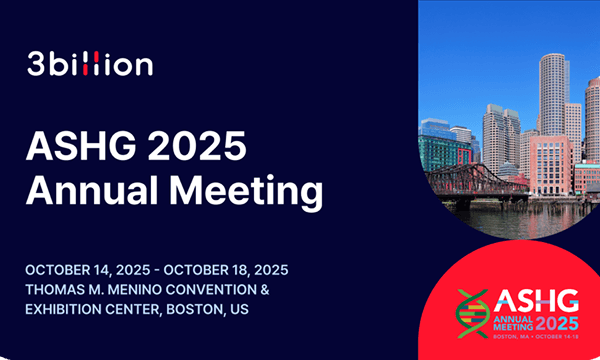
ESHG is Europe’s largest genetics conference, drawing researchers, clinical geneticists, and people from across the diagnostics industry — from all over Europe and well beyond. Last year’s conference in Milan brought together 6,881 registrants from 94 countries; the official numbers for 2026 haven’t been released yet. This year’s conference ran June 13–16 in Gothenburg, Sweden. Of everything our 3billion team picked up on the ground, here are the two threads that best capture where rare disease diagnostics is heading.
1. Genomic newborn screening was the talk of the floor
The most visible theme this year was genomic newborn screening (gNBS). National programs were out in force — Norway and Denmark among them — and the interest reached past the public sector, with private hospitals joining the conversation as well.
This looks like more than a passing trend. It signals that the starting line for rare disease diagnosis is moving earlier: from the symptomatic patient to the still-healthy newborn. And the wider screening reaches, the heavier the work that comes after it — interpreting the variants you turn up, and reanalyzing them over time. The decisive step here isn’t detection; it’s interpretation, and it’s only going to matter more.
2. Long-read: plenty of interest, little commitment
Interest in long-read sequencing has never run higher. On the floor at ESHG, though, the mood was still wait-and-see. Clinicians are holding back to see whether PacBio or Nanopore settles in as the clinical standard.
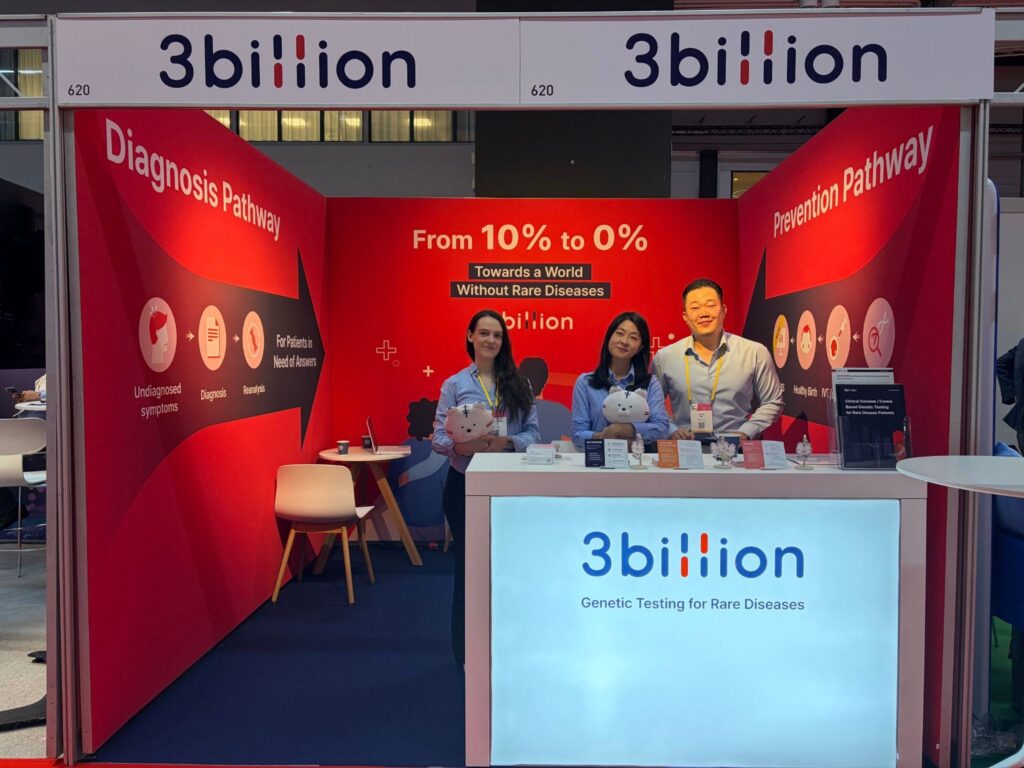
The numbers say the same thing. Among the visitors who came by 3billion’s booth, just 1.4% showed interest in long-read — a clear gap between the buzz around the technology and any real appetite to adopt it.
Until the question of which platform comes out ahead is resolved, long-read is likely to stay right where it is for a while: a technology everyone talks about, but few have committed to.
Next stop: Rotterdam
ESHG 2027 takes place June 12–15 in Rotterdam, the Netherlands. It’ll be worth watching how the two trends we saw in Gothenburg this year have shifted a year on.
Have questions about 3billion’s gNBS, long-read sequencing, or anything else? Reach out anytime — our specialists will get back to you promptly.

Soo-jung Baek
Marketing Manager
I strive to empower the rare disease community by sharing meaningful insights backed by our company’s expertise.