


Blau Syndrome: NOD2 Variants, Triad, and Clinical Clues
Blau syndrome is a rare, early-onset autoinflammatory disorder driven by mutations in the pattern-recognition receptor gene NOD2. It presents as a triad of granulomatous polyarthritis, dermatitis, and uveitis, and follows autosomal dominant inheritance. Because features overlap with early-onset sarcoidosis and juvenile idiopathic arthritis, molecular confirmation matters.
For clinicians, the practical signal is a young child—often under four years—with symmetric, minimally painful boggy synovitis, a subtle papular rash, and evolving ocular inflammation. Recognizing this pattern early can prevent joint destruction and vision loss.
Frequently asked questions
What is the classic triad of Blau syndrome?
The classic triad is granulomatous polyarthritis, dermatitis, and uveitis. Symptoms typically appear before age four. The full triad is not present in every patient, and arthritis is often the earliest and most consistent finding.
How is Blau syndrome different from Crohn disease?
Both involve NOD2, but Blau syndrome produces granulomatous inflammation of skin, joints, and eyes while rarely, if ever, affecting the gastrointestinal tract. This GI sparing is a useful distinguishing feature during evaluation.
At what age does Blau syndrome usually appear?
Onset is typically in early childhood, generally before age four. In one Japanese cohort of patients carrying NOD2 mutations, the median age at disease onset was 14 months.
The genetic mechanism
NOD2 encodes an intracellular pattern-recognition receptor whose ligand is muramyl dipeptide (MDP), a component of bacterial cell walls. On binding MDP, NOD2 activates the NF-κB pathway and upregulates proinflammatory cytokines, as reviewed by Matsuda and Kambe (2020).
In Blau syndrome, mutations act as gain-of-function changes that drive inflammation without an external trigger. The disease is a monogenic disorder resulting from these NOD2 mutations and is defined phenotypically by the arthritis–dermatitis–uveitis triad, as described by Rosé and colleagues (2014).
Where the variants sit
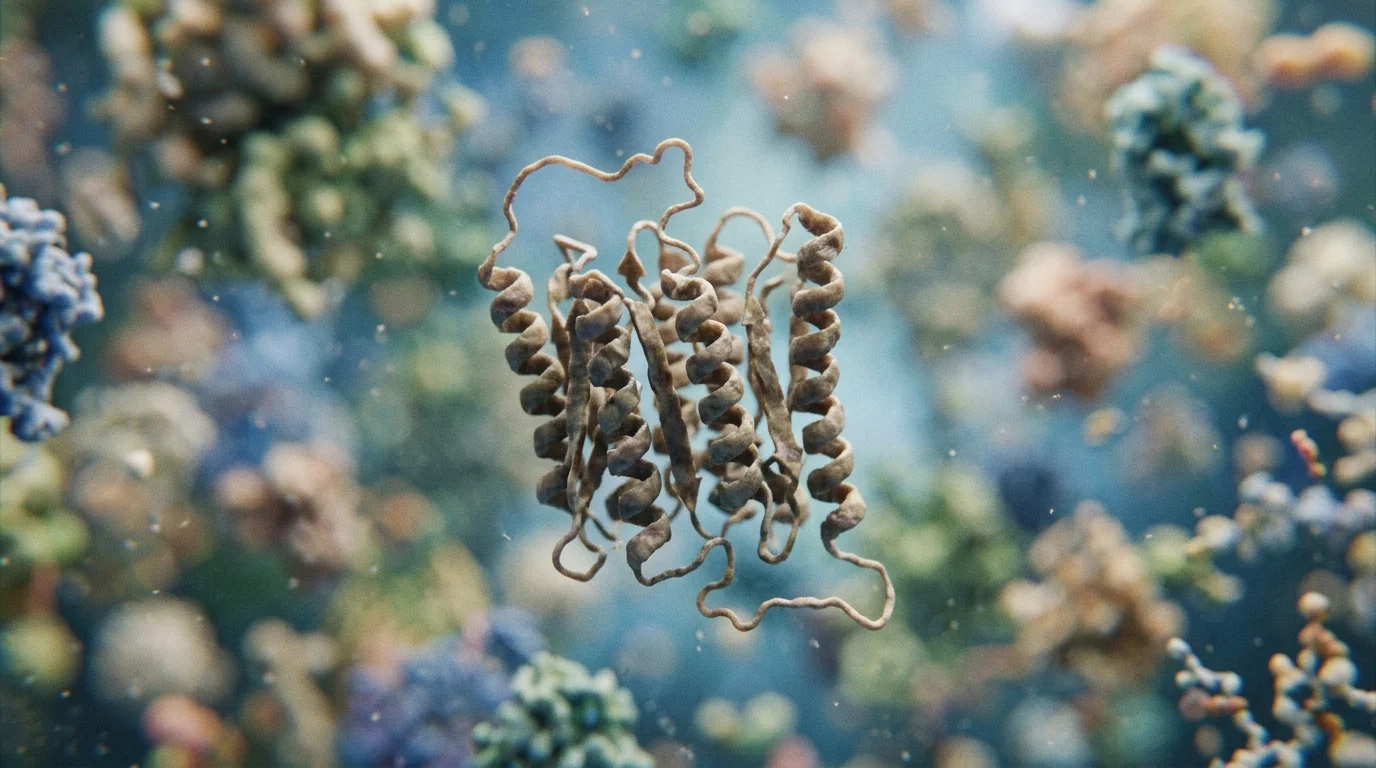
Blau-associated variants cluster in the centrally located NOD (NACHT) region of the protein. The recurrent R334W substitution arises from a heterozygous C>T change in exon 4 of NOD2/CARD15, per Wang et al. (2012). To date, up to 30 Blau-associated mutations have been reported within the gene, according to Lee et al. (2016).
Genotype can carry prognostic weight. In a cohort study, R334W and R334Q were the two most frequent mutations, and R334W tended to cause more obvious visual impairment—a finding from Okada and colleagues (2009).
Clinical presentation
Clinical symptoms appear before age four and mainly affect the skin, joints, and eyes. They are progressive and can cause severe complications including joint destruction and blindness, as detailed by Matsuda and Kambe (2020).
Joints
Arthritis is often the presenting feature. In a Chinese cohort, chronic symmetric arthritis and multi-joint periarticular swelling—painless and fluctuant—were found in all 12 children with NOD2 mutations, while the full triad appeared in 7, reported in this pediatric series (2015).
Eyes
Uveitis may develop after arthritis and skin findings, and it drives much of the long-term morbidity. Because ocular inflammation can be insidious, early ophthalmologic surveillance is warranted once the diagnosis is suspected.
Distinguishing Blau from its mimics
Two distinctions help at the bench and bedside. First, Blau syndrome produces granulomatous inflammation of skin, joints, and eyes but rarely the GI tract, separating it from Crohn disease—a point emphasized by Yao et al. (2022).
Second, Yao syndrome is a distinct adult-onset, NOD2-associated autoinflammatory disorder marked by the absence of uveitis, joint deformities, and granulomas on skin biopsy, as noted in this 2023 report. Age of onset and the granuloma question help separate the two.
Role of genetic testing
Molecular confirmation anchors the diagnosis, refines prognosis, and enables informed family counseling given autosomal dominant transmission. When the phenotype is suggestive, targeted NOD2 analysis or a broader panel or exome approach can identify the causative variant.
* This article is educational and does not replace individualized medical advice. Diagnostic and management decisions should be made with a qualified clinician.
Want to learn more about
3billion's genetic testing?
We'll reply within 1 business day.
References
- Kim W, et al., A familial case of Blau syndrome caused by a novel NOD2 genetic mutation, 2016, DOI: 10.3345/kjp.2016.59.11.S5, https://pubmed.ncbi.nlm.nih.gov/28018435/
- Mao L, et al., Blau syndrome NOD2 mutations result in loss of NOD2 cross-regulatory function, 2022, DOI: 10.3389/fimmu.2022.988862, https://pmc.ncbi.nlm.nih.gov/articles/PMC9520668/
- Okafuji I, et al., Role of the NOD2 genotype in the clinical phenotype of Blau syndrome and early-onset sarcoidosis, 2009, DOI: 10.1002/art.24134, https://pubmed.ncbi.nlm.nih.gov/19116920/
- Takada S, et al., Blau Syndrome: NOD2-related systemic autoinflammatory granulomatosis, 2020, DOI: 10.23736/S0392-0488.19.06524-6, https://pubmed.ncbi.nlm.nih.gov/32618442/
- Ueki Y, et al., Tofacitinib, a suppressor of NOD2 expression, is a potential treatment for Blau syndrome, 2023, DOI: 10.3389/fimmu.2023.1211240, https://www.ncbi.nlm.nih.gov/pmc/articles/PMC10321295/
- Wang W, et al., [Mutations of NOD2 gene and clinical features in Chinese Blau syndrome patients], 2014, https://pubmed.ncbi.nlm.nih.gov/25619344/
- Wouters CH, et al., Blau syndrome, the prototypic auto-inflammatory granulomatous disease, 2014, DOI: 10.1186/1546-0096-12-33, https://www.ncbi.nlm.nih.gov/pmc/articles/PMC4136643/
- Xiang H, et al., NOD2/CARD15 gene mutation identified in a Chinese family with Blau syndrome, 2012, https://www.ncbi.nlm.nih.gov/pmc/articles/PMC3324354/

Soo-jung Baek
Marketing Manager
I strive to empower the rare disease community by sharing meaningful insights backed by our company’s expertise.