


AAAS Gene and Triple A Syndrome: A Plain-Language Guide
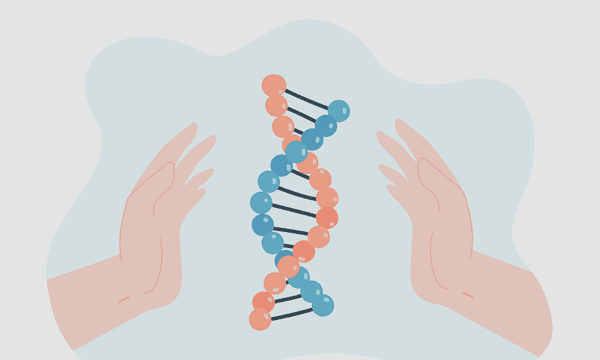
The AAAS gene gives your body the recipe for a protein named ALADIN, which helps control what moves in and out of a cell’s nucleus. When both copies of this gene carry harmful changes, a rare inherited disorder called Triple A syndrome (also known as Allgrove syndrome) can appear.
This article explains, in everyday terms, what the AAAS gene does, why its mutations cause problems, and how a genetic test can bring clarity to families facing puzzling symptoms.
Frequently asked questions
What is Triple A syndrome?
Triple A syndrome is a rare inherited disorder caused by AAAS mutations. Its three hallmark features are alacrima (reduced tears), achalasia (difficulty swallowing), and ACTH-resistant adrenal insufficiency. Neurological and skin signs may also appear over time.
How is Triple A syndrome inherited?
Triple A syndrome follows an autosomal recessive pattern. A child must inherit a changed AAAS gene from both parents to be affected. Parents who each carry one change usually have no symptoms themselves.
Can a genetic test confirm Triple A syndrome?
Yes. Sequencing the AAAS gene can identify the specific mutations responsible for symptoms. Confirming the diagnosis helps guide monitoring for adrenal crises and swallowing problems. Always discuss testing with a clinician or genetic counselor.
Do all patients have the same symptoms?
No. Even people with the identical AAAS mutation, including relatives in one family, can differ greatly in how severe their symptoms are and when they begin. This variability makes genetic confirmation valuable.
What the AAAS gene looks like
The AAAS gene sits on chromosome 12 and is built from 16 sections called exons. Together they code for a 546-amino-acid protein named ALADIN, which stands for Alacrima–Achalasia–Adrenal Insufficiency Neurologic disorder. This name captures the main features of the condition it causes when the gene fails.
ALADIN is part of the nuclear pore complex, the gatekeeper that decides which molecules enter and leave a cell’s control center. The gene is switched on in nearly every tissue, but it works especially hard in the adrenal gland, gastrointestinal tract, and brain — the very organs most affected in Triple A syndrome.

How mutations cause disease
When the AAAS gene is altered, the ALADIN protein it produces cannot reach its proper spot. Laboratory studies show that disease-associated ALADIN mutations fail to localize to nuclear pore complexes and instead drift into the cytoplasm, the fluid surrounding the nucleus.
Interestingly, the pores themselves still look normal under a microscope. Researchers found no structural abnormalities of the nuclei or nuclear pore complexes in patient cells. This tells us the problem is functional — the protein is in the wrong place — rather than a broken structure.
Why the three main symptoms appear
Triple A syndrome is defined by a distinctive trio, described in the medical literature as an autosomal recessive disorder (OMIM #231550):
- Alacrima — the tear glands make too little fluid, often the earliest sign, sometimes noticed in infancy.
- Achalasia — the muscle at the base of the esophagus does not relax, making swallowing difficult.
- Adrenal insufficiency — the adrenal glands do not respond to the hormone ACTH, so they cannot make enough cortisol.
Neurological signs, such as muscle weakness or nerve changes, and skin changes may develop later. Adrenal insufficiency is the most serious feature because a sudden shortage of cortisol can be life-threatening if untreated.
Where mutations tend to occur
Certain spots in the AAAS gene change more often than others. A study of 110 families identified mutation hot spots including Q15K and S263P, found in 17 and 21 families across different regions. In a separate Sudanese cohort of 20 families with 31 patients, testing revealed six different AAAS mutations, showing how varied the genetic picture can be between populations.
Why the same mutation can look different
One puzzling feature is that people with the very same genetic change may have mild or severe symptoms. Studies note no clear correlation between a specific mutation and the resulting phenotype — even siblings can differ in severity and age of onset. This is why symptoms alone rarely give the full picture, and why reading the gene directly matters.
How genetic testing helps
Because the three classic signs can appear separately and over many years, families often wait a long time for answers. A genetic test that sequences the AAAS gene looks directly at the DNA and can pinpoint the exact change causing symptoms.
A confirmed diagnosis does several practical things. It allows doctors to watch for adrenal crises before they become dangerous, guides management of swallowing problems, and helps parents understand recurrence risk for future children.
Want to learn more about
3billion's genetic testing?
We'll reply within 1 business day.
References
- Bizzarri C, et al., Triple A (Allgrove) syndrome: an unusual association with syringomyelia, 2013, DOI: 10.1186/1824-7288-39-39, https://pmc.ncbi.nlm.nih.gov/articles/PMC3704905/
- Cronshaw JM & Matunis MJ, The nuclear pore complex protein ALADIN is mislocalized in triple A syndrome, 2003, DOI: 10.1073/pnas.1031047100, https://www.ncbi.nlm.nih.gov/pmc/articles/PMC156285/
- Musa SA, et al., Insights into genetic and clinical profiles of triple A syndrome in Sudanese children, 2025, DOI: 10.3389/fendo.2025.1617552, https://pmc.ncbi.nlm.nih.gov/articles/PMC12411163/

Soo-jung Baek
Marketing Manager
I strive to empower the rare disease community by sharing meaningful insights backed by our company’s expertise.